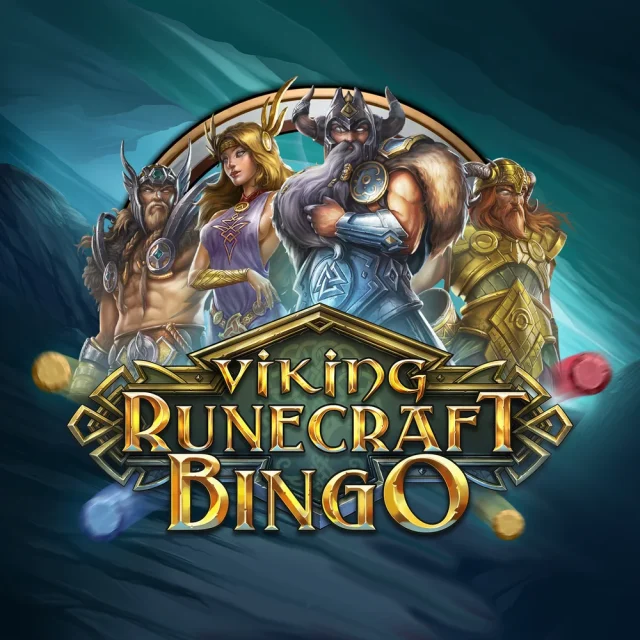
Viking Runecraft Bingo turns Play’n GO’s Norse world into a card-based game rather than a conventional reel slot. Its appeal is the visible chase: activate cards, watch a fixed draw, then decide whether the remaining gap justifies paid Extra Balls.
Viking Runecraft Bingo at a glance
| Provider | Play’n GO |
|---|---|
| Genre / theme | Fantasy |
| Game type | Video slot |
| Reels / grid | Up to 4 bingo cards; 90-ball pool |
| Payout mechanic | Pattern prizes on bingo cards; no paylines stated |
| Release date | 11 November 2020 |
| Main features | Extra Balls after 30 draws, free Gift of the Gods, and Thor, Odin, Freya and Heimdall bonus games. |
RTP and stake limits can vary by version and market. Check the information screen in the game you open. Maximum win is a ceiling, not an expected result.
Cards, draws and pattern prizes
Up to four bingo cards can be active, and each card may be toggled on or off before the round. New Cards changes the numbers on all cards, while Play starts the draw. Thirty balls are drawn from a pool of 90. A pattern prize is awarded whenever its pattern is completed; multiple patterns on one card can pay, although a higher-paying completed pattern replaces a lower one when it covers it completely.
That structure makes the base game easy to read but not passive. You are tracking several cards and several possible patterns at once, with the per-card bet determining the scale of any prize. The important distinction is that this is not a cascade or paylines game: the result is the relationship between drawn numbers and marked spaces, and the board shows exactly how close each card is.
Extra Balls and the active god
After the thirtieth ball, Extra Ball can be triggered when only one ball is needed for a prize worth at least 12x the bet per card. Each Extra Ball has an on-screen price, and up to 13 can be purchased. The thirteenth is reserved for the much tougher one-ball condition attached to a prize of at least 200x the bet per card. This gives the feature a defined boundary instead of an unlimited rescue option.
The Gift of the Gods may appear randomly on the first, second or third Extra Ball, making that ball free. A perimeter pattern also triggers a God bonus, with the active god changing after each trigger. Thor presents a ten-prize wheel; Odin offers eight revealed picks and leaves a low and high hidden prize; Freya awards an instant random prize; and Heimdall supplies the fourth named bonus game. The result is a sequence of distinct bonus treatments tied to the card rather than a generic free-spin round.
Configuration and practical verdict
The official game page identifies this exact version as a video bingo release on 12 November 2020 and confirms the 90-ball pool, 30-ball draw, four-card maximum, Extra Ball thresholds, and God bonuses. It does not publish RTP, volatility, reel/row dimensions, paylines, or a maximum win, so those configuration values remain unknown here rather than being borrowed from Viking Runecraft slots or another bingo title.
Viking Runecraft 1000 is a useful contrast because it is a grid slot with cascading symbols, whereas this game makes progress through numbered cards and purchased extensions. That comparison clarifies who will enjoy this title: players who like visible completion goals and deliberate end-of-round decisions. The trade-off is equally clear: much of the tension arrives after the main draw, and Extra Ball prices can make a near miss a costly choice. It is a focused bingo variant with meaningful thresholds, not a fast reel-spin substitute.
Strengths and weak points
Strengths
The fixed draw, visible card progress and explicit Extra Ball thresholds make every late decision legible, while four different God bonuses keep perimeter and extension outcomes varied.
Weaknesses
The main draw can end before a card is complete, and continuing requires priced Extra Balls; several important configuration figures, including RTP and volatility, are not published on the official page.
Our Editor’s View
Viking Runecraft Bingo works best for readers who want a transparent, board-led experience in the Norse setting. The card count, fixed draw and capped Extra Ball sequence make the game understandable, while the changing God bonuses prevent every close finish from feeling identical. It is less suitable if you want cascading momentum or a fully disclosed slot-style volatility profile, since the official page leaves several configuration figures unstated. Its strongest design decision is making the late-round choice specific: a player can see the gap, the prize threshold and the cost before deciding whether to continue.