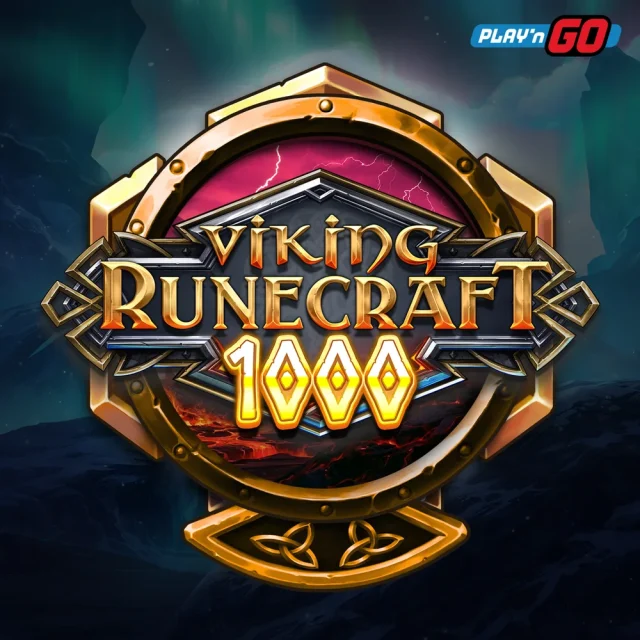
Viking Runecraft 1000 moves the Norse series onto a 6×5 scatter-pay grid. Eight or more matching symbols can pay wherever they land; there are no fixed paylines or required shapes. Winning symbols then clear and replacements fall in, so a single spin may produce several evaluations. The headline feature is a 15-stage multiplier route associated with Heimdall, Freya and Thor, reaching as high as 1,000x under the stated rules. That top stage is a destination, not a default multiplier.
Scatter pays and cascades
The first question on every stopped grid is whether at least eight copies of a paying symbol are present. Their positions can be spread across the screen. This is a very different reading task from tracing left-to-right lines: a dense patch on one side has no special status simply because it resembles a line, and seven matching symbols do not meet the eight-symbol threshold. The grid layout is large enough for multiple symbol groups, but only the game’s stated scatter-pay conditions establish an award.
After a win, the paying symbols disappear and fresh symbols fill their positions. The resulting grid is checked again, and that process continues until no new win forms. A long cascade can create multiple opportunities for multiplier development from one original spin. A short cascade can end before the higher stages matter. It is therefore misleading to describe every initial win as though it will climb the full god path. The sequence is conditional at each replacement.
The three-god multiplier path
The multiplier system has 15 stages, starting at 2x and reaching 1,000x at its upper end. Heimdall, Freya and Thor mark the progression, with upgrades arriving through cascading play and Thor able to upgrade more than once. When multiplier values qualify together, the game adds them into a combined figure before applying it to the relevant win. Addition here matters: two displayed values are not necessarily multiplied by each other. The live paytable should be consulted for the exact symbols and timing that qualify, rather than treating every god image as an automatic payout.
Three or more scatters trigger 12 free spins, with additional scatters able to add more. During the feature, a multiplier container holds and accumulates qualifying values across spins. That carry-over changes the rhythm: progress need not vanish at the end of each individual tumble sequence. Retriggers can extend play up to the game’s spin cap. However, a carried multiplier only improves a result when a qualifying win occurs under the active rules. A high figure on the meter does not itself pay on an empty spin.
Risk profile and verdict
The source listing records 96.24% default RTP, maximum volatility at 10/10 and a 60,000x theoretical win ceiling. The provider’s public feature description confirms the grid, scatter threshold, cascades and 1,000x multiplier stage; players should verify the mathematical figures and active RTP in the installed version’s information panel. Extreme volatility indicates that the most developed combinations may be rare and widely separated. Neither a dry sequence nor a nearly completed stage makes the next cascade more likely to pay.
We like the clean relationship between format and progression. The scatter-pay rule explains why the whole 6×5 screen matters, while cascades give the god ladder a natural opportunity to advance. Free spins make the multiplier state more consequential by carrying qualifying values forward. The cost is a steep gap between ordinary outcomes and the spectacular upper stages. This is a game to judge by its actual eight-symbol hits and feature progress, not by assuming the 1,000x label or theoretical ceiling is routinely reached.
Viking Runecraft 1000 at a glance
| Provider | Play’n GO |
|---|---|
| Genre / theme | Fantasy |
| Game type | Video slot |
| Reels / grid | 6 x 5 |
| Reference RTP | 96.24% |
| Volatility | 10/10 |
| Payout mechanic | Scatter pays |
| Maximum win | 60000x the bet |
| Release date | 25 August 2026 |
| Main features | No paylines, no fixed shapes. Land 8 or more matching symbols anywhere across the 6×5 grid and they pay, wherever they fall. Winning symbols clear and fresh ones drop into the gaps. Cascades keep running until no new wins form, so a single result can unfold in stages. The multiplier system runs across 15 stages, from x2 all the way up to x1000. Where multiplier values qualify, they sum together into one combined figure before that total is applied to the win. God-Based Multiplier Progression The multipliers climb a clear path: Heimdall to Freya to Thor. Each god marks a stage in the journey, with upgrades arriving through cascading play, and Thor multipliers able to upgrade more than once to reach the top stages. |
RTP and stake limits can vary by version and market. Check the information screen in the game you open. Maximum win is a ceiling, not an expected result.
Strengths and weak points
Strengths
Scatter pays make all 30 positions relevant, and cascades give the Heimdall–Freya–Thor multiplier path a logical way to develop. Free spins can carry qualifying multiplier values across the feature.
Weaknesses
Eight matching symbols are required for a scatter-pay win, while the 1,000x stage sits at the far end of a 15-step path. The recorded 10/10 volatility makes upper-end outcomes a poor session expectation.
Our Editor’s View
The most successful design choice is making the god progression respond to cascading play instead of attaching a large number to an otherwise static grid. A first eight-symbol hit opens the possibility of further drops; it does not guarantee that Thor’s highest stage arrives. The free-spin container gives earned multiplier values more time to matter, but only alongside qualifying wins. We would verify the installed RTP and maximum-win profile before comparing versions.