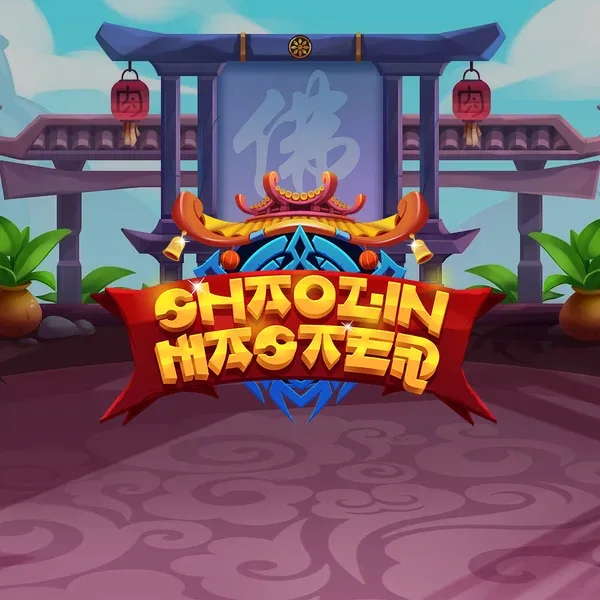
Shaolin Master turns cluster wins into a lesson in multiplier state. Cascades remove the symbols that have just paid, but Blue and Red Chi Orbs can remain behind and grow as they take part in later wins in the same round. A Balance Chi Orb has a different role: it appears only on cascades and uses the product of the Red and Blue values then present. The three orb types therefore interact through persistence, growth and a one-time snapshot rather than behaving as interchangeable Wilds.
Shaolin Master at a glance
| Provider | Hacksaw Gaming |
|---|---|
| Genre / theme | Asian |
| Game type | Video slot |
| Main features | Blue and Red Chi Orbs persist through cascades and grow by different win rules; a cascade-only Balance Orb uses their product. Student activates growing reel multipliers globally; The Master builds a bottom-stacked block payout. |
RTP and stake limits can vary by version and market. Check the information screen in the game you open. Maximum win is a ceiling, not an expected result.
How the three Chi Orbs diverge
A winning cluster is paid, its contributing symbols are removed, and replacements fall into the grid. Blue starts at 1× and rises by one whenever it participates in a cluster win. Red also starts at 1×, but its increase is based on the number of symbols in each winning cluster it joins, including Chi Orbs. A larger cluster can therefore advance Red by more than Blue in one event. Neither growth rule implies an orb is guaranteed to land or that the increased value will later meet a paying cluster.
Balance is created only on a cascade. Its multiplier equals the product of the Red and Blue Chi Orb multipliers present on the grid when it appears. If it joins a win, it applies that value and disappears with the other winning symbols. If several Chi Orbs contribute to one cluster, their values multiply together before affecting the cluster. Blue and Red survive ordinary cascade removal, but all Chi Orbs are cleared at the end of the round. Their build-up is therefore temporary: it can strengthen a chain within one round, not carry into the next spin.
The Student moves growth onto reels
Three scatters start ten Student free spins; four start twelve. Paying base-game symbols return alongside Green Chi Orbs and Green Gem modifiers. Each reel has a multiplier that increases by one for every winning symbol on that reel. A Green Gem can multiply the relevant reel value by one of the listed factors from ×2 through ×10. Landing a Green Chi Orb activates the multiplier for its reel; activated reel values then become global, are added together and multiply each winning cluster. Each activation also awards three extra spins, and no more than one Green Chi Orb may land per reel.
This creates a different kind of memory from the base game. Instead of Blue and Red orbs persisting as individual wild symbols, the bonus develops reel counters and then activates them. A filled counter alone does not affect a win until its Green Chi Orb lands. The published cap is 9,999× per multiplier, not a stated overall maximum win. The official page does not specify the chance or order of activations, so it would be misleading to describe a likely total or typical bonus length.
The Master turns values into blocks
Five scatters start The Master with three refilling lives. Ordinary symbols give way to Stone blocks, reel multipliers and modifier blocks. Normal modifiers affect the multiplier above their own reel; Epic variants affect all reel multipliers. Blue Gems add values from 2× to 10×, while Green Gems multiply by ×2 to ×10. Both types have Normal and Epic forms. Each reel multiplier has a stated ceiling of 9,999×.
Ice blocks are crushed when they land, allowing a multiplier block equal to that reel’s current value to drop into the space. Blocks settle at the bottom and stack, gradually filling the grid. A Crusher Block falls through the stack, removes multiplier blocks in its path, then becomes a new block whose value equals the sum it destroyed. Any multiplier, modifier or Crusher landing restores the counter to three; three spins without one ends the feature. At the end, block values are summed and multiplied by the bet. This gives the bonus its own spatial constraint: a high reel counter matters only if blocks can be deposited and retained in the growing stack.
Configuration and limits
The official detail page explains the cluster and feature rules but does not state RTP, volatility, grid dimensions, a numeric cluster threshold, overall maximum win or exact release date. It gives 9,999× as the per-multiplier cap in each of two bonus systems; that is not evidence for the game’s overall cap. The installed paytable is needed to confirm what cluster sizes pay and which configuration applies in a particular market.
Strengths and weak points
Strengths
The orb colors encode distinct mathematics: Blue advances by one, Red scales with cluster size, and Balance snapshots their product. The two bonuses then reinterpret multipliers as reel counters and a physical stack of values.
Weaknesses
Chi Orb growth resets at the end of each round, and activated Student counters still depend on an Orb landing. The public rules omit the paying cluster threshold and overall maximum win.
Our Editor’s View
Shaolin Master has a coherent design because its three modes give multipliers different jobs. The base round lets persistent Blue and Red orbs evolve while cascades continue; Balance can turn their current relationship into a single product, then leave the grid. The Student makes growth global only after a Green Chi Orb activates a reel counter, whereas The Master converts reel values into blocks that occupy limited space and can be cleared by a Crusher. That variety gives attentive players several states to track, but it also means a large displayed multiplier is not by itself a completed win. The missing grid and paytable details limit mathematical comparison, so the strongest assessment is about the rules’ structure rather than any claim about expected returns.
Related slot reviews
Shaolin Fortunes
Shared theme: Asian
Shaolin Fortunes 100
Shared theme: Asian
Mystic Fortune
Shared theme: Asian