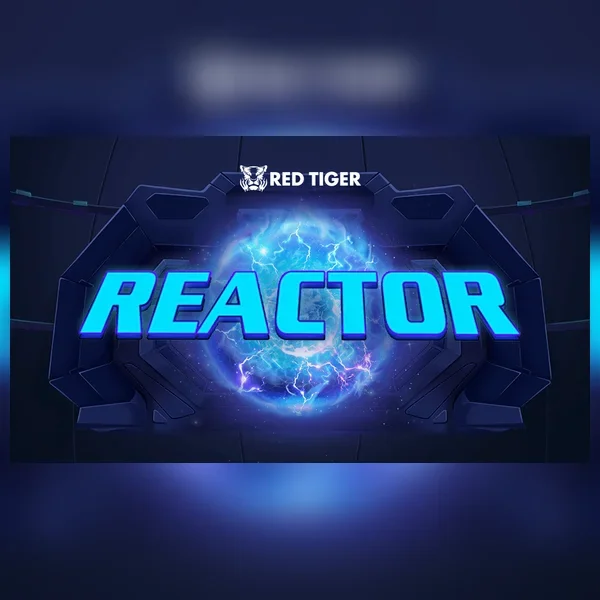
Reactor organizes its feature system around batteries. On a compact 5×3 grid, one battery starts a Respin; each additional battery adds another effect, building through Symbol Swaps, Random Wilds, a Mega Wild and finally a random multiplier. The sequence gives the game a simple escalation that can be read directly from the battery count. The official summary does not explain battery probabilities or the values selected by the final multiplier, so it is possible to describe the structure without estimating its expected return.
Reactor at a glance
| Provider | Red Tiger |
|---|---|
| Genre / theme | Space & Sci-Fi |
| Game type | Video slot |
| Reels / grid | 5 reels × 3 rows |
| Reference RTP | 96.02% |
| Volatility | 16.29 |
| Payout mechanic | 20 paylines; wins both ways |
| Minimum bet | 0.10 |
| Maximum bet | 50 |
| Bet range | 0.10–50 |
| Maximum win | 5,000× stake the bet |
| Release date | 16 August 2018 |
| Main features | 1–5 batteries cumulatively trigger Respin, Symbol Swap, Random Wilds, Mega Wild and random multiplier. |
RTP and stake limits can vary by version and market. Check the information screen in the game you open. Maximum win is a ceiling, not an expected result.
A two-way 5×3 layout
The game uses five reels and three rows, with 20 paylines and wins paid both ways. Its bet range is 0.10–50. The Red Tiger math record lists RTP at 96.02%, volatility index 16.29 and maximum payout of 5,000 times stake. The release date is August 16, 2018. No full symbol paytable or separate feature RTP is included in the supplied record, so those fields cannot be derived from the general settings.
The official overview places batteries at the center of the action. They activate features during the spin, and landing more batteries triggers more effects in a defined sequence. The source specifies thresholds from one through five batteries, but does not state how batteries are distributed across the reels or whether all five can appear in ordinary play at a known rate. The feature ladder is explicit; its probability is not.
Five battery thresholds
One battery triggers a Respin. With two, the Respin is combined with a Symbol Swap. Three batteries add Random Wilds to those first two effects. Four add a Mega Wild as well. Five batteries trigger the entire sequence plus a random multiplier. Each threshold carries forward the earlier effects, so the highest battery count does not replace the lower steps; it layers them together.
This cumulative structure makes the battery count easy to interpret: it represents how many of the listed tools can enter the event. However, the descriptions do not state which symbols are swapped, how many Wilds or cells appear, where the Mega Wild lands, or what multiplier values are possible. Nor does the summary explain whether the Respin itself can award another feature. Those details should remain open rather than being filled in from the feature names.
What the sequence means for a spin
A Respin provides another reel evaluation, while Symbol Swaps can change the symbols considered in that sequence. Random Wilds and a Mega Wild add substitution opportunities, and the fifth battery introduces an additional random multiplier. Together, these effects create a clear escalation from another chance at a result to increasingly direct symbol changes and win scaling. The official wording says features are triggered in sequence, but it does not specify exact order of resolution beyond the listed ladder or guarantee that a feature produces a win.
The source also describes gems and a futuristic presentation, but the mechanical hook is the battery system. Unlike a feature that relies on a long bonus round, this summary focuses on a battery-driven event within play. It does not list Free Spins or a feature purchase. Their absence from this supplied source should not be taken as proof about every possible game build; it simply means the documented feature set here centers on respins and reel modifications.
Published settings and uncertainty
Reactor’s listed RTP is 96.02%, with volatility index 16.29 and maximum win 5,000x. The 20-line layout pays both ways on five reels and three rows, and stakes run from 0.10 to 50. The maximum is a stated cap, not a measure of how likely the top outcome is. The source gives no battery hit rates, random multiplier values or feature-specific probabilities, so the five-step ladder can be understood structurally but not modeled from this information alone.
Players who enjoy features that scale in a visible sequence may find the battery count intuitive. Every added battery has a named consequence, and the cumulative design lets one event combine several tools. The trade-off is limited detail about how those tools behave once triggered. A complete paytable and the specific swap, Wild and multiplier rules would make it easier to judge the practical difference between battery counts.
Strengths and weak points
Strengths
Each battery threshold adds a defined effect, producing a cumulative path from Respin through symbol changes and multiplier. The ordered ladder makes the contribution of each additional battery easy to identify.
Weaknesses
The source omits battery odds, swap details, Wild placement rules and the random multiplier range. That missing detail prevents a numerical comparison of the stronger battery outcomes.
Our Editor’s View
Reactor’s battery ladder is its defining idea: one battery begins a Respin, and each additional one adds another reel effect until five include a random multiplier. That gives the feature a straightforward sense of escalation and lets the highest step combine all prior actions. The summary leaves the detailed behavior and odds of those actions unspecified, so the design is clearer than its likely frequency or value. It suits players who want a compact feature sequence they can follow, while careful evaluation requires fuller math and feature rules.
Related slot reviews

Zap Attack!
Shared theme: Space & Sci-Fi
Arcader
Shared theme: Space & Sci-Fi

Cosmic Voyager
Shared theme: Space & Sci-Fi