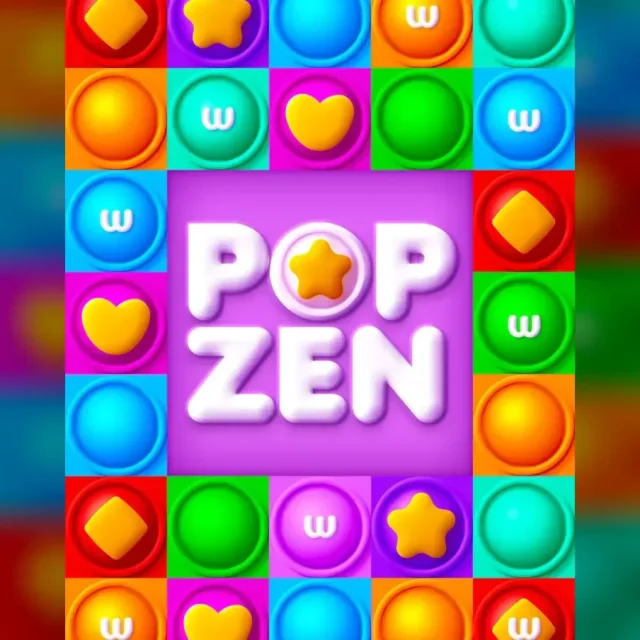
Pop Zen turns a pop-toy motif into a 7×7 cluster slot whose feature meter is tied to wins. A 100-point Progress Bar loses points as winning symbols are counted; every 25-point drop activates a random feature, and reaching zero starts the Pot sequence. That creates a visible route from ordinary clusters to a layered Wild event, although the intermediate feature is random and can also remove symbols without paying. Big symbols add a separate payout modifier, so the board’s geometry matters alongside the meter.
Pop Zen at a glance
| Provider | BGaming |
|---|---|
| Genre / theme | Game Shows & Board Games |
| Game type | Video slot |
| Reels / grid | 7×7 grid |
| Reference RTP | 96.3% |
| Volatility | Very high |
| Payout mechanic | Cluster pays |
| Maximum win | €240,000; ×12,000 maximum multiplier the bet |
| Release date | 8 February 2024 |
| Main features | 100-point bar drops one per winning symbol; random feature every 25 points; zero launches 3×3, two 2×2, then nine Wilds. Big symbols double participating wins. |
RTP and stake limits can vary by version and market. Check the information screen in the game you open. Maximum win is a ceiling, not an expected result.
Clusters, refills, and Big symbols
The game pays through matching clusters on the 7×7 board. Winning symbols disappear, the remaining symbols fall, and new ones refill the spaces; this repeats within a spin while more combinations form. A square of four identical symbols can merge into one 2×2 Big symbol. That Big symbol doubles the payout for a winning combination it joins. If several Big symbols participate, their multipliers are summed. A Big can split into four regular symbols during a refill, but this feature does not apply to Wilds.
The Backlit feature selects low symbols after a spin. If the highlighted symbols form wins, they disappear and two Wilds replace them; the effect applies once to all such winning combinations on the screen. Wilds last until the next spin, and the highlighted symbols remain unchanged during refills. A losing spin can also trigger a random Re-spin: some symbols turn Wild, the win is recalculated, and a Big symbol may result. These events change the board through different routes, but their rules do not guarantee a payout from the transformation.
The Progress Bar and Pot sequence
The bar starts at 100 and each symbol in a winning combination removes one point. At every 25-point decrease, one of four random features may activate: Wild Blast, Smash, X-lines, or Clone. The trigger is tied to progress, not to the number of spins. Wild Blast converts three to six symbols into Wilds, each destroying its orthogonal neighbors without awarding separate wins. Smash removes all low symbols without payment. X-lines places a central Wild and changes diagonal symbols into matching copies, while Clone changes a chosen symbol and its copies into another identical symbol. These effects can reshape the board, but some do so without an immediate win.
At zero, the Pot feature creates a 3×3 Wild. On the second refill it splits into two 2×2 Wilds, then on the third into nine separate Wilds; winning Wilds disappear. This staged reduction spreads Wild coverage over successive refills rather than presenting all Wilds at once. Buy Bonus can trigger Pot at a displayed, bet-adjusted price. The observed rules do not state that the purchased entry changes the three-stage sequence.
Published settings
BGaming lists 96.3% RTP, Very high volatility, cluster pays, maximum win €240,000, maximum multiplier ×12,000, and release date February 8, 2024. The board is 7×7. The bar and feature triggers are described, but the odds of its random features and the number of points removed by each winning symbol are not quantified beyond one per symbol.
Strengths and weak points
Strengths
The 100-point meter gives the random base features a clear trigger, and the Pot’s 3×3-to-two-2×2-to-nine-Wild sequence has a defined order.
Weaknesses
Several meter features remove symbols without paying, and the rules provide no probabilities for them, so the effect of each 25-point trigger cannot be estimated.
Our Editor’s View
Pop Zen links cluster play to a measured feature cycle: wins drain the bar, quarter marks introduce random transformations, and zero begins the Pot’s staged Wild sequence. Big symbols add transparent arithmetic when they participate in a win, while Re-spin and Backlit can change a result after its initial layout. The structure is unusually explicit about timing and sequence, but not about the odds of the random events. Some triggered transformations remove low symbols without a separate payout, so bar progress should not be read as a reward guarantee. Players who like tracking a feature meter and watching a board reorganize will have clear rules to follow; those comparing expected feature value need probabilities and a full paytable.
Related slot reviews

THE Game Show
Shared theme: Game Shows & Board Games

Mahjong Jinpai™
Shared theme: Game Shows & Board Games

Feng Kuang Ma Jiang
Shared theme: Game Shows & Board Games