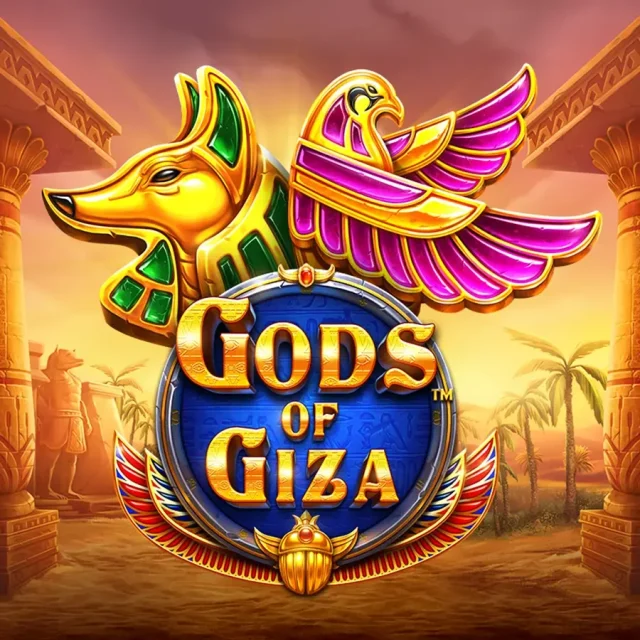
Gods of Giza is a 5 x 5 cluster slot where wins reshape the board. Groups of at least three adjacent matching symbols pay, disappear and allow replacements to cascade into the empty spaces. Every successful step can also create a Wild, while countdown versions have a limited working life tied to their participation in later wins.
Gods of Giza at a glance
| Provider | Pragmatic Play |
|---|---|
| Genre / theme | Ancient Egypt |
| Game type | Video slot |
| Reels / grid | 5 x 5 |
| Reference RTP | 96.01% |
| Volatility | Medium |
| Maximum win | 5000x the bet |
| Release date | 6 April 2023 |
| Main features | Clusters of at least three cascade from the 5×5 grid; each win creates a Wild, countdown Wilds expire through winning participation, and four or more scatters award free spins. |
RTP and stake limits can vary by version and market. Check the information screen in the game you open. Maximum win is a ceiling, not an expected result.
How a cluster leaves the next board behind
The cluster threshold begins at three adjacent matching symbols. Once a group qualifies, its symbols are removed and new symbols fall into place. This permits another cluster to form without starting a separate paid spin. The board is therefore read as a sequence: initial cluster, removal, replacement and possible follow-up result.
A win creates a Wild that can assist subsequent evaluations. Countdown Wilds lose part of their remaining count when they participate in a winning cluster and disappear after that resource is exhausted. Their value comes from helping later cascades, but their finite life prevents them from becoming permanent improvements to the grid.
Free-spin length starts with the scatter count
Four or more scatters award free spins. The stored source detail specifies fifteen spins at the initial threshold, with higher scatter counts granting larger allocations and a documented upper allocation of 120 spins. This is an allocation range linked to the trigger, not a promise that every bonus begins with the maximum.
Inside the feature, clusters still cascade and created Wilds continue to influence later board states. A long allocation gives the rules more time to operate, but it does not make countdown Wilds permanent or ensure that replacements form further clusters. The symbols and adjacency on each refreshed grid still control continuation.
Medium volatility and a 5,000x boundary
The reviewed release carries 96.01% RTP, medium volatility and a maximum win of 5,000x. Its recorded launch date is 6 April 2023. These values describe the documented version; the maximum is an upper limit rather than an expected result, and the RTP is a long-run theoretical measure.
The distinctive comparison point is not the Egyptian theme but the temporary resource created by winning. Cascades can add Wilds, then later wins can use up their countdowns. That gives every successful cluster two possible consequences: it pays now and may alter the usefulness of the board that follows.
Strengths
A three-symbol cluster threshold makes cascades accessible. Each win can influence the next grid by creating a Wild. Countdown values clearly show that some Wilds are temporary, and the free-spin allocation scales with the number of triggering scatters.
Weaknesses
Countdown Wilds expire through winning participation and cannot support the grid indefinitely. Replacement symbols may fail to create another adjacent group. The maximum 120-spin allocation requires the corresponding stronger scatter trigger and should not be treated as the standard bonus length.
Our Editor’s View
Gods of Giza works as a chain of changing board states rather than a collection of isolated spins. Its strongest feature is the link between a cluster win, the Wild it creates and the cascades that may follow. The finite countdown supplies a real constraint. With 96.01% RTP, medium volatility and a 5,000x cap, the game is most accurately understood through that balance between creation and expiry.
Related slot reviews
Tomb of Nefertiti
Shared theme: Ancient Egypt
Tomb of Akhenaten
Shared theme: Ancient Egypt
Book of Dead GO Collect
Shared theme: Ancient Egypt