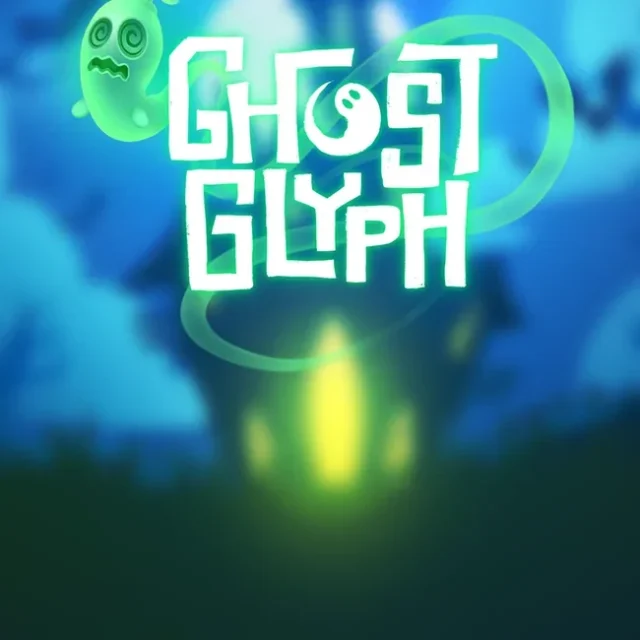
Ghost Glyph builds its identity around a chain of small events rather than a single conventional free-spin trigger. Winning clusters disappear, a Ghost Glyph can enter the gap, and that Wild may activate one of five Ghost Urns. The order matters: the first four Urns are randomly selected from three colors, while the fifth is always Blue. That setup makes an ordinary tumble capable of changing the next state of the same spin, then potentially setting conditions for the later Freespins Bonus and its Massive Wild feature.
Ghost Glyph at a glance
| Provider | Quickspin |
|---|---|
| Genre / theme | Horror |
| Game type | Video slot |
| Main features | Winning clusters tumble; consumed Ghost Glyph Wilds activate ordered Urns, while Blue starts or extends the free-spin bonus and the meter can unlock Massive Wilds. |
RTP and stake limits can vary by version and market. Check the information screen in the game you open. Maximum win is a ceiling, not an expected result.
A cluster win can change the next tumble
Quickspin’s rules describe tumbling in both the base game and Bonus Game. Symbols belonging to a winning cluster are removed, symbols fall into the empty spaces, and any new clusters add to the existing win. The chain stops when a fall produces no new winning cluster. This is a cumulative sequence within one spin: a later cluster contributes to the running result rather than replacing the earlier one.
The Ghost Glyph adds an intermediate step. After a winning cluster is removed and before the symbols tumble, one empty position may receive a Ghost Glyph. At most one is awarded per tumble. It is evaluated and removed as a Wild; each consumed Glyph activates the next Urn in the prepared left-to-right order. The feature therefore has a clear dependency: a Glyph must appear in an opening and then be part of a win before an Urn is activated. If Blue is activated, unused Ghost Glyphs turn into Wilds, and no new Glyphs are awarded during the remaining tumbles of that spin.
Five Urns, with Blue held for last
Before each spin, the game determines five Urns. The first four are randomly chosen from Yellow, Green and Red; the final position is always Blue. Activations follow the number of Ghost Glyphs consumed, so one qualifying Glyph does not immediately reveal every effect. Yellow adds four to ten randomly placed Wilds to the game area. Green selects a low-paying symbol and transforms all of its appearances into another low-paying symbol type. Red selects a low symbol and removes all copies. Blue activates the bonus game, or awards at least three free spins if already in the bonus.
These effects do different kinds of work. Yellow changes the board with Wilds, while Green and Red alter the low-symbol population; Blue changes the mode of play. Because the first four positions are drawn from only three colors, a color can recur, but the notes do not specify odds or guarantee a particular order. Nor do they give the exact trigger count for entering the Bonus Game. It would be misleading to turn the guaranteed fifth Blue into a promise that every spin reaches it: only consumed Ghost Glyphs advance the Urn sequence.
The bonus’s separate closing condition
The Freespins Bonus has a Paranormality Meter, and the final meter level determines whether the Massive Wild feature activates at the end. Level 1 or higher is the stated threshold. The Massive Wild feature has 22 levels; below Level 3, Massive Wild symbols are removed when they form part of a win. The page does not explain the meter’s increments or the full award rules for each level in the published rules, so the exact route from a bonus spin to a particular level remains unspecified.
The available facts also do not state the reel dimensions, paylines or ways, RTP, volatility, maximum win or release date. That makes Ghost Glyph’s documented appeal unusually rules-led: the chain from cluster to Glyph to Urn is detailed, while basic configuration and parts of the bonus meter remain open questions. Players should check the casino’s game information for the active configuration rather than infer it from these feature rules.
Strengths and weak points
Strengths
The Glyph-to-Urn chain gives winning clusters a second consequence, and the fixed final Blue position makes the sequence’s endpoint easy to understand.
Weaknesses
The detailed Urn chain still leaves players without the meter progression, bonus trigger count or basic layout, so it is difficult to judge how often its most elaborate sequence can occur.
Our Editor’s View
Ghost Glyph is most legible when treated as a sequence with gates. A cluster creates the opportunity for a Glyph; a Glyph has to be consumed to advance the Urn order; and the Blue Urn marks the bonus transition or adds spins during that mode. Its strongest design idea is that the same spin can evolve through several distinct board effects without pretending every tumble guarantees the next one. The trade-off is informational: the published rules leave the meter’s detailed progression and core game configuration unanswered. Readers who enjoy tracking how one event unlocks another may find the Urn order satisfying, while anyone comparing technical settings will need to confirm missing values in the casino’s own help screen.
Related slot reviews
Vampire’s Charm
Shared theme: Horror
Werewolf’s Hunt
Shared theme: Horror
Zombie Outbreak
Shared theme: Horror