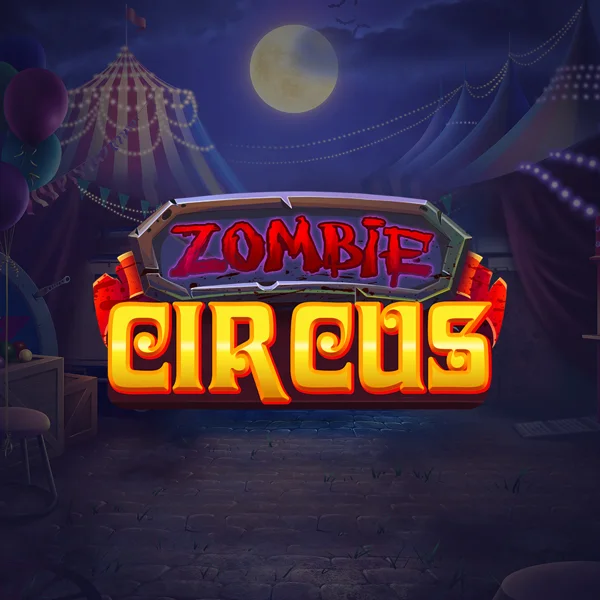
Zombie Circus is a 5×3 video slot that turns its horror-circus premise into a choice-led bonus. The official description confirms a zombie-slaying pick round, 3-15 free spins and a possibility for up to three symbol types to become wilds. That gives the game a clear identity, but not a complete mathematical profile: RTP, volatility, payline count and maximum win are not stated in the saved source. The useful review question is therefore how the pick, spin count and wild conversion fit together.
Zombie Circus at a glance
| Provider | Relax Gaming |
|---|---|
| Genre / theme | Horror |
| Game type | Video slot |
| Reels / grid | 5×3 |
| Main features | A 5×3 slot with a pick zombie-slaying bonus, 3-15 free spins and up to three symbol types converted to wilds. |
RTP and stake limits can vary by version and market. Check the information screen in the game you open. Maximum win is a ceiling, not an expected result.
A compact 5×3 starting point
The observed Relax Gaming page identifies Zombie Circus as a 5×3 video slot. It does not state a fixed number of paylines, ways, stake limits or the precise symbol-payment rule, so the grid should be treated as the confirmed visual framework rather than evidence of a particular payout model. The compact screen suits the theatrical theme: ordinary spins establish the cast and bonus symbols, while the important variation arrives when the bonus round is reached. With no published RTP or volatility in the source, players need the active game help to judge its baseline return and swing level.
The pick round changes the free-spin setup
The main feature is a pick one zombie-slaying bonus round. The saved official description confirms that this round awards between 3 and 15 free spins, and that up to three symbol types can be turned into wilds. The sequence matters: the player first makes a choice, then receives a spin allowance and a wild-symbol configuration. It is not safe to assume that every pick gives the same number of spins, that three symbol types are always selected, or that the wilds remain active outside the feature; those rules are not recorded. The feature’s real interaction is that choice affects the conditions under which the subsequent free spins are evaluated. the Zombie Train comparison is useful here because its more documented feature profile provides a clearer contrast to Zombie Circus’s choice-led wild setup.
What the source confirms—and leaves open
The 5×3 grid and the 3-15 free-spin range are supported by the official product description. RTP, volatility, paylines, maximum win and release date remain unknown for this exact standard version. That boundary is important because a variable spin award can sound generous without showing its selection probabilities, while converting symbol types into wilds can be highly sensitive to which symbols are chosen. Zombie Circus is therefore easier to describe mechanically than financially: the source gives a coherent bonus outline, but the installed rules must supply the missing limits.
Strengths and weak points
Strengths
The compact 5×3 frame supports a clearly defined choice point, and the documented 3-15 free-spin range gives the bonus genuine variation instead of a single fixed award.
Weaknesses
The source does not explain the pick table, payline model, wild duration, RTP, volatility or maximum win, so the practical value of the feature remains difficult to measure.
Our Editor’s View
Zombie Circus has a focused feature idea rather than a crowded catalogue: pick a zombie-slaying outcome, receive a variable number of free spins, and see as many as three symbol types converted to wilds. That makes the bonus worth examining as a setup decision, not merely a longer sequence of spins. The limitation is equally clear. Without the pick table, payout model, RTP, volatility and maximum win, the official page cannot establish how often the strongest combination appears or how much it can contribute. Our editor would recommend it to readers who enjoy choice-based horror bonuses, provided they check the live help screen before treating the wild conversion as a predictable advantage.
Related slot reviews

Devil Fire
Shared theme: Horror

Devil Fire Bonu$ Coin
Shared theme: Horror
Vampire’s Charm
Shared theme: Horror