
JILI’s Zeus begins with an elimination-style 4-by-5 grid and 4,096 ways, then gives the free-game round room to grow. Three Scatters start Free Games; collecting more Scatters there expands the board and adds spins. The listing puts the largest configuration at 38,416 ways and describes additional spins as limitless. This is a connected feature loop rather than a collection of unrelated bonus names: entry, board expansion, and extra rounds are all tied to Scatter collection. Mystery symbols add a separate transformation, though the short description does not spell out when or how it occurs.
Zeus at a glance
| Provider | JILI |
|---|---|
| Genre / theme | Greek Mythology |
| Game type | Video slot |
| Reels / grid | 4 reels by 5 rows at the starting configuration |
| Payout mechanic | 4,096 ways initially; up to 38,416 ways in Free Games |
| Maximum win | 10,000x the bet |
| Main features | Three Scatters enter Free Games. Continued Scatter collection in Free Games expands the board and adds spins; the listing states a maximum of 38,416 ways. Mystery symbols randomly transform into identical symbols. |
RTP and stake limits can vary by version and market. Check the information screen in the game you open. Maximum win is a ceiling, not an expected result.
From a compact grid to more ways
The official configuration starts at 4 by 5 with 4,096 ways. JILI calls the game elimination type and says mysterious symbols randomly transform into identical symbols. That is the extent of the stated base-game rule: the catalogue does not define a matching threshold, the symbols eligible to transform, whether a transformation itself creates a win, or exactly when an elimination takes place. It would be tempting to fill those gaps with familiar cluster-slot conventions, but the listing does not establish them. The defensible reading is that the game can change symbol identity at random and that this transformation is intended to affect winning opportunities.
The ways range is the more measurable part of the setup. In Free Games, Scatter collection expands the board from its starting arrangement toward a maximum of 38,416 ways. More ways mean more possible symbol routes under the game’s evaluation rules; they do not guarantee a win on each spin. JILI gives no probability for collecting Scatters or reaching the maximum board, so the upper configuration should be read as a possible feature state, not the expected shape of an ordinary round.
Scatter collection links space and time
Three Scatters are the stated entry condition for Free Games. Once there, continued Scatter collection does two jobs: it expands the board and grants additional spins. That pairing is the title’s most consequential interaction. A Scatter is not only an entry marker; within the feature, it changes the number of ways available and extends the time in which further collection may happen. The official summary does not specify how many additional spins a Scatter awards, the expansion increments, a maximum spin count, or whether the board stops growing before the stated 38,416-way cap.
The phrase ‘limitless additional spins’ appears in JILI’s feature description, but it does not mean every round continues indefinitely. It means the listing states no fixed retrigger ceiling; actual continuation still depends on collecting Scatters. Likewise, the source does not say whether the same Scatter can both expand the board and add a spin, or whether those effects have separate thresholds. The interaction is clear at a high level, while its precise step-by-step resolution remains an in-game-help question. Mystery-symbol transformations should not be assumed to occur only in the base game or to persist into Free Games, because no such timing rule is published.
Published figures and practical boundaries
For global version 252, JILI lists a maximum win of 10,000x, a starting 4,096 ways, an upper 38,416 ways, and a March 2024 publication month. A regional JILI-branded page reports additional mathematical and layout data, but those figures are outside this global record and are not used here. The exact global observation does not state RTP, volatility, an exact calendar release date, or a complete reels-and-rows configuration for the expanded state. The recorded 4-by-5 starting grid should not be mistaken for proof that every bonus layout has the same dimensions.
This setup rewards attention to a changing board, but its central transformation is less transparent than the Scatter loop. The official entry tells readers that mystery symbols become identical symbols at random, without specifying the target or the resulting calculation. The Free Game sequence is easier to follow conceptually—collect, expand, gain spins—yet its increments are missing. That asymmetry makes Zeus more describable than fully predictable: the feature’s direction is established, but exact state changes belong to the rules panel.
Strengths and weak points
Strengths
Scatter collection has two linked consequences in Free Games—more ways through board expansion and more spins—so one symbol family shapes both the feature’s scale and duration.
Weaknesses
JILI does not publish expansion increments, added-spin values, or mystery-symbol targets, leaving the timing and exact payout effect of the two changing-board mechanics unclear.
Our Editor’s View
Zeus has a strong structural idea: its Free Game Scatters can enlarge the board and add spins, letting the feature grow in both possible ways to connect symbols and available time. JILI confirms a 4,096-way start, a 38,416-way maximum configuration, and a 10,000x ceiling. It also mentions random mystery-symbol transformations, but provides no target list or resolution order. That makes the Scatter loop the clearest reason to choose the game, while the transformation remains harder to assess from the catalogue alone. Readers who enjoy following a feature that develops across successive rounds may find the design coherent; those comparing exact probabilities or bonus duration need the global build’s in-game rules, since no RTP or volatility is stated in the saved entry.
Related slot reviews
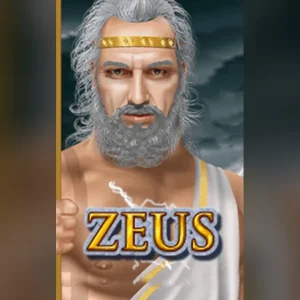
Zeus
Shared theme: Greek Mythology
Zeus 2
Shared theme: Greek Mythology
Mighty Medusa
Shared theme: Greek Mythology