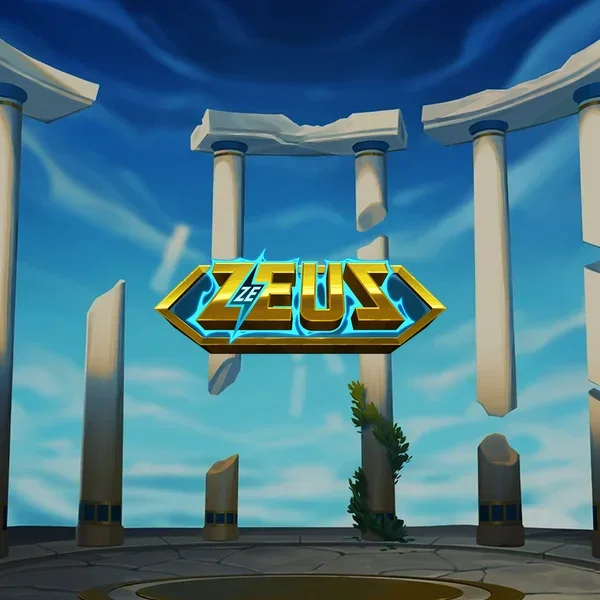
Ze Zeus is built around a two-stage result. A cluster win first removes every regular symbol of each winning type, then the Hand of Zeus can turn the vacated positions into Divine Squares. Those squares reveal coin and special symbols, which resolve through a fixed order before their values are added to the final award. The central question is therefore not just whether a cluster lands, but what the resulting board contains and how those symbols interact.
Ze Zeus at a glance
| Provider | Hacksaw Gaming |
|---|---|
| Genre / theme | Greek Mythology |
| Game type | Video slot |
| Reels / grid | 6 reels × 5 rows |
| Payout mechanic | Cluster wins; numeric cluster threshold not stated |
| Maximum win | 10,000× bet |
| Main features | Winning clusters remove all regular symbols of each winning type; a Hand activates Divine Squares for Coins, adjacent Zap multipliers and ordered Vessel collections. Three bonuses change square persistence and Hand availability. |
RTP and stake limits can vary by version and market. Check the information screen in the game you open. Maximum win is a ceiling, not an expected result.
Clusters change the whole symbol field
The official page describes a six-reel, five-row cluster game. It does not publish a numeric cluster threshold, so the exact number of matching symbols needed for a qualifying cluster should be checked in the running game’s paytable. Once a winning combination occurs, Super Cascades remove all regular paying symbols of the type or types included in that win, not merely the individual positions that formed the cluster. New symbols fall into the cleared spaces. This can create another board state, but the rules do not say every cascade must produce another win.
Winning positions become Divine Squares after the win. They are not immediately cash prizes: a Hand of Zeus must appear on the grid to activate them, and the official sequence places this action after wins have been completed. The distinction matters because the initial cluster payout is settled as a win event, while the marked squares begin a separate reveal process. If the Hand is absent, the source does not describe those squares as activated during that result.
A reveal sequence with adjacency and collection
Activated squares can reveal Bronze, Silver or Gold Coins, a Vessel of Wealth, or a Zap of Zeus. The Coins are cash prizes expressed as multiples of the bet. After the symbols have been revealed, each Zap activates and multiplies Coins or existing Vessels on adjacent squares. Adjacency makes placement relevant: a Zap does not, according to the rule, multiply every Coin anywhere on the grid. The listed rules do not give each coin’s value or the Zap multiplier values, so neither should be inferred from the artwork.
Vessels act after all Coins have been revealed and all Zaps have resolved. They collect the values of Coins and other Vessels and store the total; their activation order is top-to-bottom, then left-to-right. This is a genuine dependency: a Vessel’s collection can include values already affected by a Zap, while a later Vessel may collect the value stored by an earlier one. After the last Vessel acts, the remaining Divine Squares activate again and repeat the reveal-and-resolution process. When no more reveals or activations remain, all Coins and Vessels are added and multiplied by the bet to determine the final feature award. The order prevents treating every symbol as an independent payout.
Three free-spin modes alter persistence
Three FS scatters in the base game start ten What If Zeus Was One of Us? spins. Divine Squares remain highlighted between spins until a Hand activates them. Four scatters instead start Ze Zeus Take the Wheel with ten spins; squares stay highlighted for the entire bonus, including after activation. Five scatters start Ze Zeus Might Superstar, also for ten spins, with those persistent highlights plus a guaranteed Hand of Zeus on every free spin. Bronze Coins are absent in this highest-scatter mode. Two additional FS symbols during a bonus add two spins, while three add four; four FS symbols upgrade the first bonus to Take the Wheel and award four extra spins.
These changes affect when a square remains available and whether the activating Hand is assured; they do not guarantee that a particular revealed symbol appears or that each spin wins. The guaranteed Hand in Superstar removes one activation uncertainty, but the square still needs to reveal useful contents. A Wild substitutes for all paytable symbols, while the official page reports a 10,000x maximum win available in the base game and each named feature mode. RTP, volatility, exact cluster size and calendar release date are not stated on the detail page, so the ceiling is not a typical outcome or a probability measure.
Strengths and weak points
Strengths
Ze Zeus makes board state matter through cascading clusters, marked positions and a clearly ordered reveal. Zap adjacency and Vessel collection create distinct, traceable interactions rather than one undifferentiated bonus award.
Weaknesses
The Hand must appear before marked squares activate, and Zaps only affect adjacent eligible symbols. The page withholds cluster thresholds, symbol values, RTP and volatility, limiting numerical comparison.
Our Editor’s View
Our editor sees Ze Zeus as a game of sequencing and spatial relationships. A cluster clears every regular symbol of its winning type; then the Divine Square system asks whether a Hand appears, what each square reveals, which Coins a Zap can reach, and what each Vessel can collect in its position order. That chain gives the bonus an intelligible internal logic, but it also means a marked square is only potential until activated and populated. Persistent squares and a guaranteed Hand make the three bonus tiers meaningfully different, although neither guarantees valuable reveals. Readers who enjoy following a multi-step grid resolution may find the structure satisfying. Those who want transparent configuration figures will need the in-game paytable, because the public page omits several basic measurements.
Related slot reviews
Rise of the Sun God
Shared theme: Greek Mythology
Medusa II
Shared theme: Greek Mythology
Legend of Perseus
Shared theme: Greek Mythology