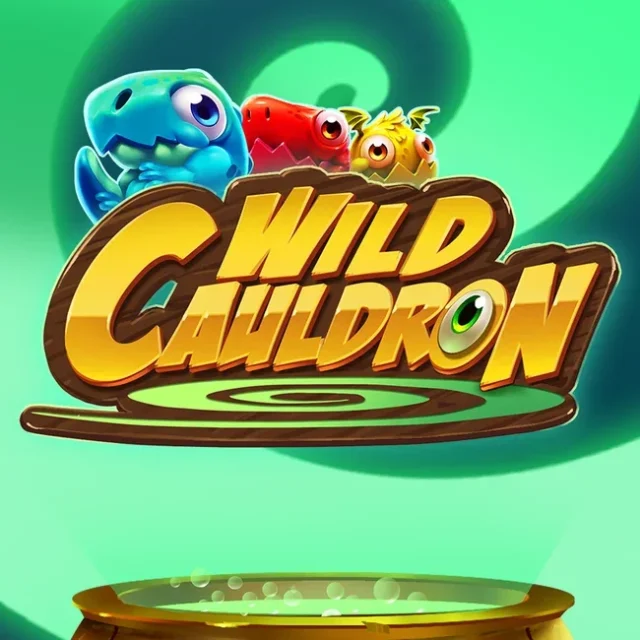
Wild Cauldron starts as a 4×6, 4,096-ways game in a witch’s lair, then lets a winning tumble reshape the board. Winning symbols lock at the bottom, non-winners are removed, and new symbols tumble in. Each successful tumble adds a row, so the grid can reach 8×6 and 262,144 ways before the sequence ends. Its Free Spins bonus makes that progression more consequential by retaining both expanded ways and win multipliers between spins.
Wild Cauldron at a glance
| Provider | Quickspin |
|---|---|
| Genre / theme | Fantasy |
| Game type | Video slot |
| Reels / grid | 4×6, expanding to 8×6 |
| Payout mechanic | 4,096 to 262,144 bet ways |
| Main features | Winning symbols lock during tumbles while rows expand to 8×6; Wilds raise a sequence multiplier to 7. Four Scatters trigger Free Spins, where expanded ways and multipliers persist and two Scatters add two spins. |
RTP and stake limits can vary by version and market. Check the information screen in the game you open. Maximum win is a ceiling, not an expected result.
Locked wins build the board
A winning line starts the Locking Symbol Tumble. Winning combinations remain locked and accumulate at the bottom of the reels, while non-winning symbols disappear and are replaced by tumbling symbols. This separates the feature from an ordinary cascade: the winning material stays in place during the sequence instead of immediately leaving with the losing symbols.
Every tumble that produces another winning combination adds one row of symbols. The game begins at 4×6 with 4,096 bet ways and can grow to eight rows, or 8×6 with 262,144 ways. The reels reset at the end of the tumble sequence, which occurs when there are no more winning combinations. Growth is therefore temporary in base play and tied directly to continuation.
Wilds raise a sequence multiplier
A Wild landing during a tumble sequence raises the Win Multiplier by one. Quickspin states that it can reach 7 for a single spin and resets when that tumble sequence ends. The multiplier is thus not a permanent base-game counter: a Wild matters within the current chain, while the absence of further wins closes the chain and clears both the board state and the multiplier.
Four or more Bonus Scatters in a single tumble sequence trigger Free Spins. The initial spin count depends on the Scatter total; six Scatters, the stated maximum, award 12 Free Spins. Inside the bonus, two additional Scatters on a spin add two spins. Most importantly, Expanded Ways and Win Multipliers persist between spins throughout the bonus, changing the role of progress from short-lived sequence state to feature-long state.
Confirmed layout, unknown maths
The official page verifies the 4×6 opening grid, 4,096 initial ways, 8×6 maximum grid and 262,144 maximum ways. It calls the game high volatility but does not give an exact RTP, a numeric maximum win or a release date in the observed material. Those fields remain unknown. A fuller Game Sheet was linked by Quickspin but could not be read through the available source fetch because of its file size; that is not a reason to import values from an unaudited summary.
Floating Dragon New Year Festival Ultra Megaways is a published comparison for persistent feature state, although its Hold & Spin mechanics are different from Wild Cauldron’s tumble rules.
Persistence is earned, not assumed
Wild Cauldron’s key relationship is the boundary between base and bonus. Base-game rows and multiplier reset at the end of each sequence; Free Spins retain both across spins. The limitation is the trigger requirement: a tumble must continue to build the board, and at least four Scatters must arrive in one sequence to start the bonus.
Strengths and weak points
Strengths
Locked wins, added rows and Wild multipliers have explicit reset rules, while Free Spins deliberately preserve the latter two states across spins.
Weaknesses
Base progress disappears when a tumble chain stops, and the bonus requires four or more Scatters in a single sequence before any persistence begins.
Our Editor’s View
Wild Cauldron makes a tumble sequence do several jobs at once. Locked winners define what remains on the board, later wins add rows and ways, and Wilds raise a multiplier that lasts only until the sequence ends. The Free Spins feature changes that expiry rule by carrying both Expanded Ways and the multiplier across the whole round, while additional Scatters add spins. That creates a clear reason to distinguish an ordinary cascade from a bonus state. The limits are also explicit: the base grid resets when no new win appears, and a bonus needs four or more Scatters in one tumble sequence. Exact RTP and maximum figures are not established here. It suits readers who value mechanics with an observable build-and-reset cycle over a static grid.
Related slot reviews
Dragon Castle
Shared theme: Fantasy

Dragon’s Realm
Shared theme: Fantasy
Sir Blingalot
Shared theme: Fantasy