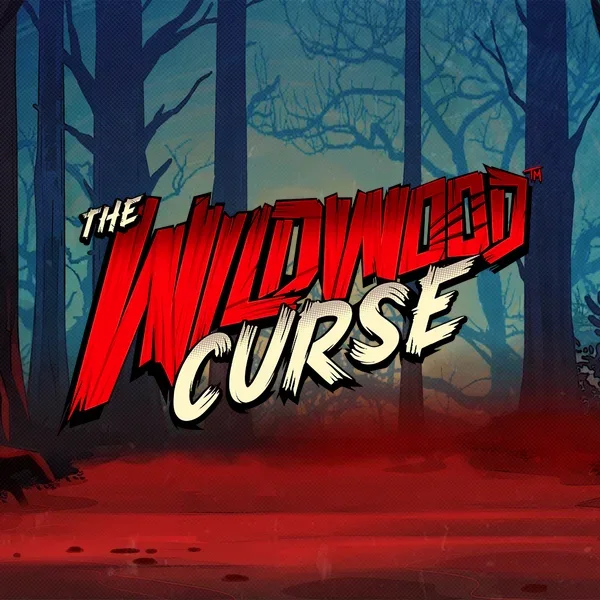
The Wildwood Curse turns a Wild symbol into a continuing event. Wilds stick and start Nightmare Respins; further Wilds extend that sequence until no new ones arrive or the grid has no available positions. Four Wilds in an exact two-by-two square can then become a Cursed Cluster. The important distinction is between a respin that persists and a cluster that qualifies only through a precise shape.
The Wildwood Curse at a glance
| Provider | Hacksaw Gaming |
|---|---|
| Genre / theme | Horror |
| Game type | Video slot |
| Main features | Sticky Wilds trigger Nightmare Respins; exact two-by-two Wild squares form Psycho, Monster or Twins clusters. Three scatter counts select distinct free-spin modes. |
RTP and stake limits can vary by version and market. Check the information screen in the game you open. Maximum win is a ceiling, not an expected result.
A square is the gate to the curse
The official rules say wins are awarded on each Nightmare Respin. Wild symbols landing in that sequence remain sticky until it ends, giving subsequent respins a changed grid to work with. Another Wild can continue the sequence, but an occupied grid also stops it. The page does not describe the underlying payline or ways count, so the safest reading is about the verified Wild mechanism rather than an invented base payout model.
Three characters with different time horizons
The Psycho shows a random multiplier for its cluster on each Nightmare Respin. It affects a win only when the cluster participates in that winning combination. The Monster instead spreads multipliers to a random number of grid positions; values on the same position add together. If another respin begins, those spread values disappear and the Monster spreads fresh ones. A high-looking position therefore is not necessarily carried into the next respin.
The Twins starts at 2x and doubles its cluster multiplier on each Nightmare Respin, up to the stated 1,000x cap. That makes continuing the sequence especially relevant to this character, although the multiplier still needs a qualifying win involving the cluster. When multiple eligible clusters or multipliers contribute to one winning combination, their values are added before applying the result. They are not multiplied one after another. The official page limits simultaneous Cursed Clusters to six, preventing an unlimited interpretation of this accumulation.
Swamp, Playground and No Escape
Three FS scatters in the base game trigger The Swamp with eight free spins and a higher chance of Wilds. Four trigger The Playground with ten free spins, retaining the Swamp mechanics and increasing the chance of Cursed Clusters. Five trigger hidden No Escape with ten free spins and at least one Cursed Cluster guaranteed on every spin. The progression moves from a better chance of the input symbol, to a better chance of the formed feature, to a guaranteed cluster. None of those terms promises that its cluster will take part in a paying combination.
FS symbols cannot land during Nightmare Respins or in any of the three bonuses. That restriction matters because a long respin sequence cannot also build more FS scatters within itself. It narrows what can be inferred about retriggers from the public rules. A feature may extend through new Wilds, but the stated scatter trigger remains a base-game condition.
What remains outside the public rules
The exact-title page gives unusually detailed cluster behaviour but does not supply RTP, volatility, grid dimensions, a numeric payline count, maximum game win or calendar release date. The Twins’ 1,000x cap is a cap on that character’s multiplier, not a maximum win for the slot. A full in-game paytable is still needed to judge how frequently particular combinations pay and what mathematical setup the local casino uses.
Strengths and weak points
Strengths
The exact-square formation gives sticky Wild respins a clear spatial goal. Psycho, Monster and Twins behave differently across respins, making the identity of a formed cluster genuinely consequential.
Weaknesses
A cluster multiplier counts only when it participates in a win; Monster’s spread values reset on the next respin. The public page leaves RTP and the base payout structure unstated.
Our Editor’s View
The Wildwood Curse has more to offer than an escalating number on screen. Its best idea is making the geometry of Wild placement decisive, then giving each Cursed Cluster a different relationship with time. The Monster can change its footprint from respin to respin, while the Twins benefits from continuation and The Psycho rerolls a cluster value. Our editor would favor this for readers willing to follow a layered feature sequence and check the actual winning combinations. Anyone seeking a quick numerical comparison will need the installed game’s paytable and RTP; the official overview does not provide them, and a character cap cannot stand in for a game maximum.
Related slot reviews

Vampire’s Charm
Shared theme: Horror
Werewolf’s Hunt
Shared theme: Horror
Zombie Outbreak
Shared theme: Horror