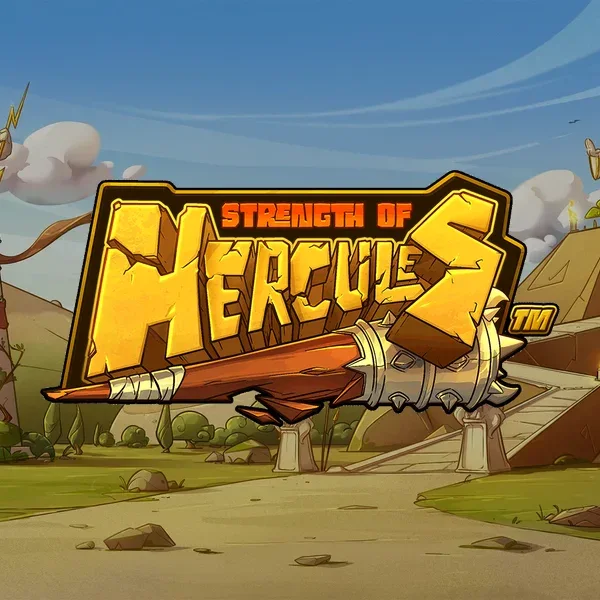
Strength of Hercules uses motion as a game rule. A RotoGrid symbol turns the grid clockwise by a quarter-turn, after which new wins can be evaluated before another rotation begins. The same movement can connect Wilds in the base game or redirect coins and free-spin symbols through a blocked labyrinth during a different bonus.
Strength of Hercules at a glance
| Provider | Hacksaw Gaming |
|---|---|
| Genre / theme | Greek Mythology |
| Game type | Video slot |
| Main features | RotoGrid rotates sequentially, allowing wins and Wild connections between turns; Bonus Choice offers a rotation-focused mode or a coin-routing Labyrinth. |
RTP and stake limits can vary by version and market. Check the information screen in the game you open. Maximum win is a ceiling, not an expected result.
Rotations resolve in stages
Each RotoGrid activation turns the grid clockwise once. Any new wins are processed before the next turn, so multiple symbols do not simply produce one unexplained final arrangement. If several RotoGrid symbols land together, they activate sequentially only after all rotations from the previous symbol finish; at most three can land on one spin. This sequencing lets a rotation create a new win, and that win settles before another source of movement acts.
After each rotation, Wilds on the same reel connect and fill the positions between them with additional Wilds. A later rotation can bring both original and newly created Wilds into new same-reel groups, potentially spreading further. Wilds substitute for paytable symbols but cannot replace FS symbols while connecting. Separately, once the grid settles, Might of Hercules may strike with a club or fist, replacing every occurrence of one randomly chosen low-paying symbol already on the grid with Wilds. The official text names this as a chance, not a guaranteed event. Rotation, connection and replacement are distinct routes to a denser Wild layout.
The player chooses the bonus structure
Three or four FS scatters bring up Bonus Choice rather than automatically selecting one game. With three, the choice is ten Labors spins or eight Labyrinth spins. With four, it is Godly Labors or Godly Labyrinth. Labors retains the base mechanics and increases the chance of RotoGrid and Wild symbols; Godly Labors is described as a variant in which both appear more frequently. The page does not give rates for either increase, so the choice is a qualitative shift, not a quantified probability comparison.
Labyrinth changes the task. Coins and FS symbols must travel toward Treasure Chests at the bottom of the grid. Cracked Stone blocks can be crushed by a Coin or FS symbol directly above them, letting it descend repeatedly until a Skull Block stops it or it reaches the bottom. A reaching symbol is collected in the chest for its reel. Each chest begins at 0x and holds a progressive value: Adding Coins increase it, while Multiplying Coins multiply the current value. Coin values are listed from 1x to 100x for Adding and x2 to x20 for Multiplying. Each collected FS adds one free spin.
The labyrinth can change direction
When Coins and FS symbols stop moving, the grid may rotate either way, breaking Cracked Stone and opening a route around Skull Blocks. Might of Hercules can destroy random Skull Blocks and sometimes Cracked Stones; this may reveal more Coins or FS symbols. Godly Labyrinth gives ten spins and may land higher-value Coins more often, with no stated rate.
The page omits RTP, volatility, grid size, paylines, maximum win and exact release date. Coin values cannot replace those measures. Rotation and pathing define the game, but movement and block-removal odds are unpublished.
Strengths and weak points
Strengths
Sequential rotations make new wins and Wild connections part of a readable chain, while Labyrinth gives movement a separate goal of routing values into reel-specific chests.
Weaknesses
Might of Hercules and Labyrinth rotations are chance-based, block removal does not guarantee a route, and the source gives no odds or numerical return profile.
Our Editor’s View
Strength of Hercules has two related but distinct forms of movement. RotoGrid changes the ordinary arrangement in controlled stages, resolving wins between turns and letting Wilds connect again after subsequent rotations. Labyrinth turns that movement into navigation, where symbols descend through breakable stone but can be stopped by Skull Blocks. The bonus choice is a meaningful decision between more frequent rotation and Wild opportunities or a collection puzzle with reel-by-reel progressive chests. That specificity is the game’s appeal for readers who like watching a board state evolve. It is less suited to a numerical comparison from the public page alone: the provider gives feature rules and symbol values but no RTP, probabilities or payout configuration. The possibility of a helpful rotation should be read as possibility, not as a guaranteed route to a prize.
Related slot reviews
Rise of the Sun God
Shared theme: Greek Mythology
Medusa II
Shared theme: Greek Mythology
Legend of Perseus
Shared theme: Greek Mythology