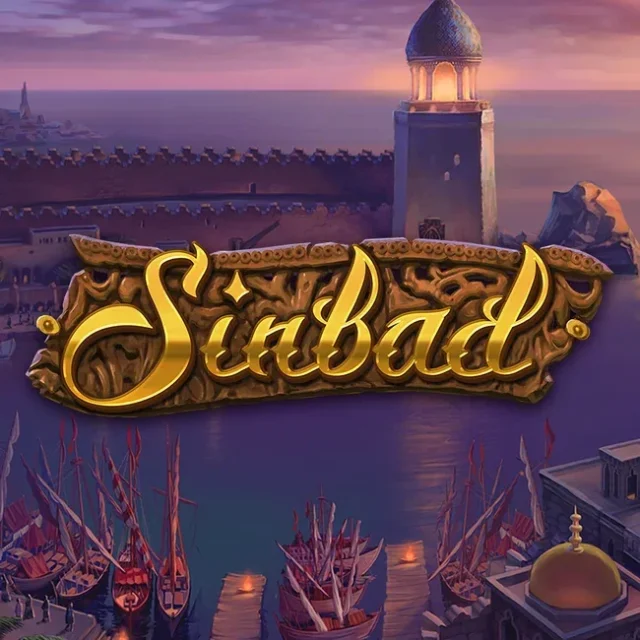
Quickspin’s Sinbad combines a changing base-game layout with a choice among three distinct Free Spins journeys. Each spin randomly stacks one or more symbols, so the same reel positions can present a different pattern of matching symbols from round to round. When Free Spins arrive, the player chooses Ape, Roc or Snake: locked Wilds, collected Diamonds and a moving Wild trail respectively. The choice changes the feature’s central interaction, not merely its name, and the source describes different volatility levels without giving exact numerical ratings.
Sinbad at a glance
| Provider | Quickspin |
|---|---|
| Genre / theme | Adventure & Exploration |
| Game type | Video slot |
| Volatility | Ape is described as most volatile and Snake as least volatile; no numeric ratings |
| Main features | Every spin randomly stacks symbols. Free Spins offer Ape locked Wilds, Roc Diamond collection and Wild conversion, or Snake Wild trails; volatility differs by choice. |
RTP and stake limits can vary by version and market. Check the information screen in the game you open. Maximum win is a ceiling, not an expected result.
Random stacking changes each spin’s pattern
Quickspin says one or more symbols are randomly stacked on every spin. This changes the arrangement of matching symbols before the result is evaluated and is intended to create alternative gameplay from spin to spin. The official description does not state the reel and row dimensions, line count or exact stacking probabilities, so the mechanic can be explained as a changing symbol layout without assigning it a precise mathematical effect.
That random arrangement also interacts with the bonuses. In the Roc journey, Quickspin specifically says random stacking enhances the feature’s gameplay. However, the description does not quantify that enhancement or state a threshold for the Roc’s extra spins. The observation supports the relationship in broad terms, not a claim that stacking guarantees Diamond collections or a bonus extension.
Choose among Ape, Roc and Snake
The Free Spins feature is based on three of Sinbad’s journeys, and players choose which bonus to play. Quickspin identifies the Ape version as the most volatile and Snake as the least volatile; Roc sits between them in the page’s comparison, but no numbered ratings are supplied. The distinction gives the player a meaningful ruleset choice, while leaving exact RTP and volatility figures for each option unspecified.
In Ape, whenever the Ape appears, it leaves one or more Wild symbols locked in place for the rest of the Free Spins. Those positions can contribute again on later spins, so the feature’s state can build through persistent Wild placement. In Roc, the bird collects Diamond symbols and changes regular symbols into Wilds. Collecting a certain number of Diamonds also triggers extra spins, although Quickspin does not specify that number in the published description. The random stacked reels are said to enhance this mode, but the exact collection sequence and award boundaries are not detailed.
Snake takes a different approach: it appears fairly frequently and leaves a trail of Wilds as it moves across the reels. The source characterizes this as the less risk-taking option, relative to the other choices, but gives no exact probability or volatility score. It does not describe Snake Wild persistence or an extra-spin rule, so this review does not infer either. The three choices thus vary in how they place Wilds and whether they collect another symbol, while the precise internal probabilities remain undisclosed.
Configuration limits and a useful comparison
The official page observation and retained game-sheet record do not establish Sinbad’s exact RTP, numerical volatility ratings, reel layout, payline count, maximum win or calendar release date. The page does establish only a relative volatility order for two options: Ape is highest and Snake lowest. Treating that comparison as a number or assigning a specific RTP would go beyond the available description. For a published comparison, Book of Duat also lets a player shape the free-spin feature, but through a finite pool of picks rather than Sinbad’s three journey-specific Wild systems. That difference helps clarify what Sinbad’s choice controls.
Different routes to persistent Wild influence
Sinbad’s strongest feature is that its three choices produce distinct play patterns: locked Wilds in Ape, collection and conversion in Roc, and a Wild trail in Snake. Its limitation is uneven detail. Ape’s persistence is stated plainly, while Roc’s collection threshold and Snake’s exact movement rules are not quantified in the published description. The selection is meaningful, but players seeking exact configuration figures or fully specified award thresholds will need the in-game rules for their particular version.
Strengths and weak points
Strengths
The three journeys change how Wilds affect the board: Ape locks them, Roc collects and converts, and Snake leaves a trail, so the pre-bonus choice alters the feature’s behavior.
Weaknesses
Roc’s Diamond threshold and some movement details are unstated, while the page supplies relative volatility language but no numeric ratings or exact configuration values.
Our Editor’s View
Sinbad’s bonus choice is its clearest point of distinction. Ape turns appearances into locked Wild positions, Roc links Diamond collection to Wild conversion and possible extra spins, and Snake leaves Wilds along its path. Randomly stacked symbols alter the base layout and Quickspin says they enhance the Roc journey, adding a link between the base mechanic and one bonus option. The source leaves important boundaries open, especially Roc’s collection threshold, exact volatility figures and the game’s mathematical configuration. It is a good fit for readers who value choosing among noticeably different bonus behaviors, provided they do not expect the public feature summary to supply every probability or layout detail. The three journeys give the game variety, while the missing numerical rules limit precise comparison.
Related slot reviews

Dungeon of Riches
Shared theme: Adventure & Exploration

TREASURE RAIDERS
Shared theme: Adventure & Exploration
SWORD OF KING
Shared theme: Adventure & Exploration