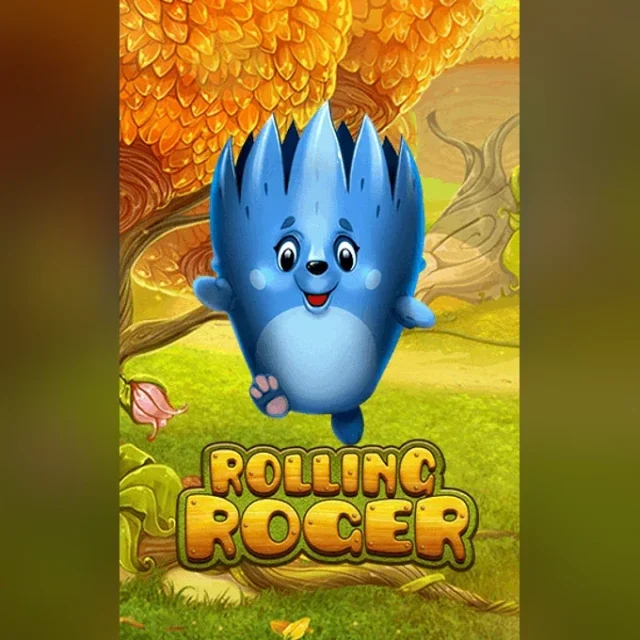
Rolling Roger makes character movement the pay rule: Roger rolls randomly three to fifteen times over unique symbols, and prizes depend on the symbols crossed. The same routes can collect acorns, a capped resource spent on Free Spins and Wilds.
Rolling Roger at a glance
| Provider | Habanero |
|---|---|
| Genre / theme | Animals |
| Game type | Video slot |
| Reels / grid | 5×3 |
| Volatility | Medium |
| Payout mechanic | Rolling Pays (25 Coins) |
| Maximum win | x534 the bet |
| Main features | Roger rolls randomly 3–15 times over unique symbols for Rolling Pays; he gathers up to 120 acorns; 3+ Scatters trigger acorn-funded Free Spins, while random Wilds cost 5 acorns; no retrigger. |
RTP and stake limits can vary by version and market. Check the information screen in the game you open. Maximum win is a ceiling, not an expected result.
A rolling-pay reel layout
The 5×3 game uses Rolling Pays (25 coins). From the last spin’s starting point, Roger moves randomly in any direction for three to fifteen steps over unique symbols; prizes depend on counts of the different symbols crossed. This is not a conventional payline result. Symbol values and movement probabilities are not supplied, and the move range is not a promise of wins.
The overview does not clarify whether repeated visits count again or how multiple prize groups are resolved. The supported rule is narrower: a random route determines symbol counts, and those counts determine prizes.
Acorns connect movement to the bonus
Rolling over any of four animated symbols collects acorns. Scatters appear after 40 spins, and the balance is capped at 120. Three or more Scatters trigger Free Spins, each costing one acorn; a Scatter trigger therefore needs a stored balance to fund play.
Wilds may be awarded randomly for five acorns, while Free Spins cannot retrigger. The rules create different costs against one finite balance, but do not say that players choose when to buy a Wild or explain what happens if the balance cannot fund the full bonus. The initial spin count is also unspecified.
Settings and unknown pay details
The standard game is Medium volatility, with RTP options of 92%, 94%, 97% and 98%, and a maximum multiplier of x534. The operator selects the active RTP; the maximum is a ceiling. The overview gives no release date, full paytable, movement odds or Scatter schedule beyond the 40-spin threshold.
Movement with a finite resource budget
One route drives both symbol-count prizes and acorn collection, connecting the pay mechanic to later features. The 120-acorn cap and one-versus-five acorn costs make the resource boundaries concrete.
Random paths, unknown movement odds and unclear repeat-visit scoring limit prediction. Acorns are spent on spins or Wilds, the starting Free Spins count is unspecified, and the bonus cannot retrigger. The game fits readers who enjoy route-based results and resource tracking, but exact accounting requires the in-game rules.
Strengths and weak points
Strengths
One random route drives both symbol-count Rolling Pays and acorn collection, giving Roger’s movement a clear relationship to a capped resource that can fund spins or Wilds.
Weaknesses
Movement odds and repeated-symbol scoring are not explained, acorns are consumed by bonus spins and Wild awards, and the Free Spins round cannot retrigger.
Our Editor’s View
Rolling Roger stands out through a coherent link between motion and resource use. Roger’s route determines which symbols count toward Rolling Pays and may gather acorns, while the accumulated acorns pay for Free Spins or random Wild awards. That makes the forest journey more than a visual animation. The trade-off is a ruleset whose core movement is random and whose public summary leaves repeated-symbol scoring and the bonus’s initial spin count unresolved. Readers who like watching a route produce several kinds of consequences may enjoy the premise; those who prefer transparent per-spin odds should check the game help before treating the movement range or x534 maximum as a guide to likely results.
Related slot reviews

Lucky Neko
Shared theme: Animals
Jurassic Kingdom
Shared theme: Animals

Win Win Won
Shared theme: Animals