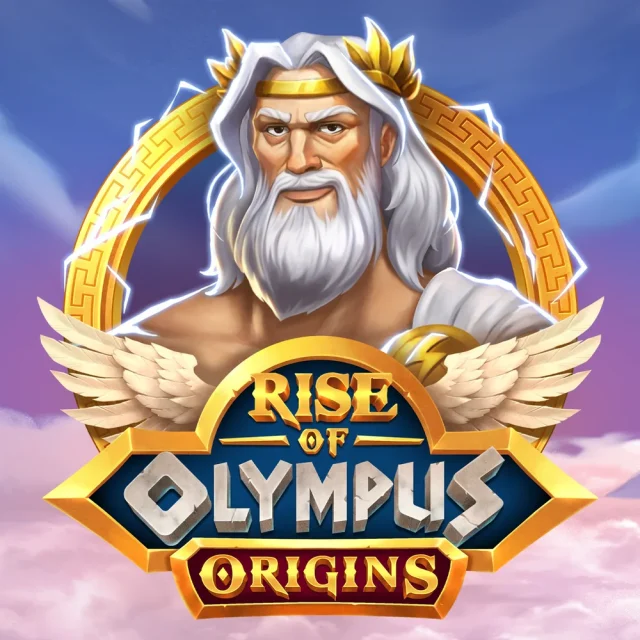
Rise of Olympus Origins builds its contest around a 5×5 cluster grid and the powers of Zeus, Poseidon and Hades. The important action is the changing arrangement of symbols: a divine intervention matters through the winning groups it helps form.
Rise of Olympus Origins at a glance
| Provider | Play’n GO |
|---|---|
| Genre / theme | Greek Mythology |
| Game type | Video slot |
| Reels / grid | 5 x 5 |
| Reference RTP | 96.29% |
| Volatility | 8/10 |
| Payout mechanic | Cluster pays |
| Maximum win | 20000x the bet |
| Release date | 25 July 2024 |
| Main features | In Rise of Olympus Origins, you’ll spin the 5×5 grid to create winning clusters of symbols, all the while seeking the many bonus features to enhance win chances and values. With the help of Zeus, Poseidon, and Hades, this grid can become imbued by the power of these three brothers, each bestowing their divine abilities to the worthiest of mortals. Take a look at what their will can bring into reality. For Rise of Olympus Origins, the checked rules leave the next outcome independent after the main trigger. A visible setup can therefore continue, improve or end without guaranteeing a higher return. The practical boundary in Rise of Olympus Origins is the end of its named feature state. Once that state closes, retained values and temporary modifiers no longer describe the following base-game result. |
RTP and stake limits can vary by version and market. Check the information screen in the game you open. Maximum win is a ceiling, not an expected result.
What the regular game asks you to read
Rise of Olympus Origins is a 5×5 cluster-paying grid where winning groups, rather than paylines, are the basic unit. In practical terms, the regular result should be read from the documented layout and win model before any special animation is given extra meaning. Zeus, Poseidon and Hades can lend their own powers to the grid as the feature layer develops This is a useful starting point because it separates an observed game rule from an attractive but non-binding display.
The documented feature route
Zeus, Poseidon and Hades add their powers to a board that pays for clusters. Their interventions matter through what they do to the 5×5 arrangement: the useful question is whether the resulting groups qualify for a cluster win. The three characters identify different abilities, but they do not establish a fixed rotation or an automatic chain of awards in Origins. Those details require the game’s own help screen.
Where the mechanic can stop or change direction
A cluster game is read board by board: divine effects can improve one arrangement, but their appearance and the next cluster remain uncertain. That limitation is not a defect in the description; it is the part of the structure that keeps the feature from being read as a promise. A reader can follow the state on screen, but the next qualifying symbol, cascade, wheel result or re-spin still has to occur.
Recorded configuration for this version
The saved reference for the standard Rise of Olympus Origins release lists 96.29% RTP, 8/10 volatility, 5 x 5, Cluster pays, and a maximum win of 20000x. It records the release date as 2024-07-25. These are configuration facts, not estimates of a session; the live help panel remains the sensible check where an operator offers alternative settings.
Strengths and weak points
Strengths
Cluster evaluation gives the gods’ interventions a visible context: changes to the 5×5 board can be assessed through the groups of matching symbols that remain.
Weaknesses
The available description does not explain each god’s full activation rules. That limits comparison of their abilities and leaves the frequency and duration of interventions unclear.
Our Editor’s View
Origins is most interesting as a board-focused game in which three familiar gods can change the situation around a cluster win. Its character names alone are not enough to explain the bonus in detail, however. Readers comparing it with another Olympus title should check this version’s individual powers and activation conditions before importing a rotation, multiplier rule or free-spin behaviour from a similarly named release. Related review: Rise of Olympus 100.
Related slot reviews
Medusa’s Madness
Shared theme: Greek Mythology
Rise of Athena
Shared theme: Greek Mythology
Athena Ascending
Shared theme: Greek Mythology