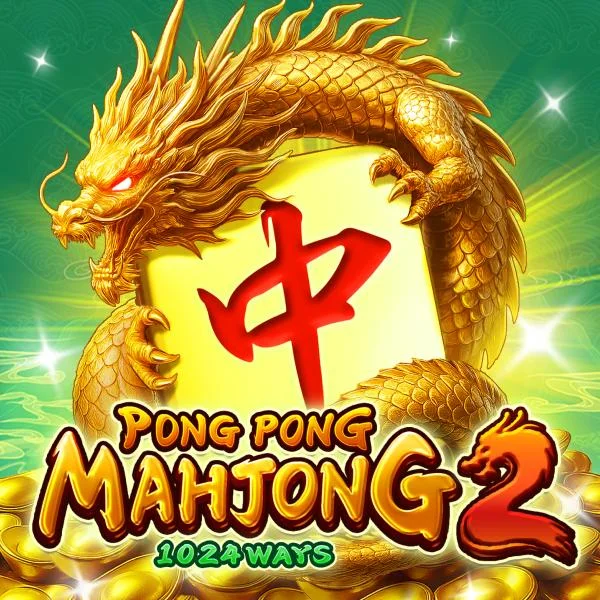
Pong Pong Mahjong 2 uses a five-reel, four-row Mahjong presentation, but its key idea is a rotating Pong Area around the board. Cascades build a multiplier trail, then the active area can change matching symbols into wilds, coins, multipliers or locked respins. Two bonus routes—regular Free Spins and Dragon Free Spins—extend that same system with different entry conditions.
Pong Pong Mahjong 2 at a glance
| Provider | Microgaming |
|---|---|
| Genre / theme | Asian |
| Game type | Video slot |
| Reels / grid | 5 reels, 4 rows |
| Reference RTP | 96.19% |
| Volatility | Medium |
| Payout mechanic | 1,024 ways |
| Maximum win | 7,000x the bet |
| Release date | 28 January 2026 |
| Main features | Cascades advance a multiplier trail; the rotating Pong Area can create wilds, coins, multipliers or locked respins; scatters trigger Free Spins or Dragon Free Spins. |
RTP and stake limits can vary by version and market. Check the information screen in the game you open. Maximum win is a ceiling, not an expected result.
Cascades and the multiplier trail
The official page lists five reels, four rows, 1,024 ways, 96.19% RTP, Medium volatility, a 0.20–20.00 USD range and a 7,000x maximum win. A matching combination cascades off the board and new symbols fall into the empty spaces. In the base game, the multiplier trail moves through 1x, 2x, 3x and 5x as cascades continue; the later combination receives the multiplier associated with its cascade position.
The trail therefore rewards continuity, not just the first win. A cascade ending the sequence stops further progression, while a new match can move the board to the next multiplier. The page does not suggest that a cascade is guaranteed after any particular symbol count, so the mechanic remains a random chain rather than a fixed progression the player can force.
The rotating Pong Area
One Pong Area is active at a time and cycles anti-clockwise around the board. After a base-game cascade, it reveals three symbols. If all three match, that area’s modifier applies to matching symbols on the grid. The top area turns matching symbols into wilds; the left turns them into coins; the bottom turns them into multipliers; and the right locks matching symbols and starts a respin-style sequence where new matching symbols can also become locked.
This is a useful example of a feature whose effect depends on the board state. The same cascade can expose a different area on a later step, and the three-symbol reveal must match before the modifier is used. The area is not a permanent global enhancement, and its name alone does not guarantee that a wild or coin conversion will happen.
Free Spins and Dragon Free Spins
Three scatter icons anywhere trigger regular Free Spins. Two scatter icons plus a special scatter at the same time trigger 10 Dragon Free Spins. Both rounds use the game’s core presentation, and extra scatters add two spins to the tally. In Dragon Free Spins, a dice symbol can add a random one to six spins. The official page does not describe the dice as a multiplier or prize symbol; its documented role is to add spins.
The game also offers direct access for 40x stake to regular Free Spins or 100x stake to Dragon Free Spins. Those prices change the entry cost, not the published RTP or 7,000x ceiling. Medium volatility does not mean every purchased round will produce a long cascade, and the maximum win remains a limit rather than a normal outcome.
Strengths and weak points
Strengths
The rotating area gives each cascade a possible board-specific modifier, while the multiplier trail and two scatter routes make the Mahjong theme mechanically distinct.
Weaknesses
The strongest modifier requires a three-symbol match, the active area changes over time, and the optional Dragon route costs considerably more than regular Free Spins.
Our Editor’s View
Pong Pong Mahjong 2 is built around interaction rather than a single headline feature. A winning combination creates a cascade, the cascade advances the multiplier trail, and the active Pong Area may then translate a matching reveal into a wild, coin, multiplier or locked-respin effect. That sequence gives the board a changing role from one tumble to the next. The bonus design follows the same logic: regular scatters open Free Spins, while the special Dragon condition offers a separate route with a dice-based spin addition. Our Editor’s View is that the rotating area is the most convincing part of the design because it makes the same board feel different depending on which side is active. the earlier Pong Pong Mahjong review provides a natural comparison with the related Mahjong jackpot title. The trade-off is conditionality: three symbols must match, a cascade must occur, and the higher-priced Dragon option costs 100x stake. Players who enjoy visible modifiers should find the structure easy to follow, but the 7,000x ceiling and Medium label should still be treated as configuration facts, not session expectations.
Related slot reviews

Caishen Wins
Shared theme: Asian

Ganesha Fortune
Shared theme: Asian

Thai River Wonders
Shared theme: Asian