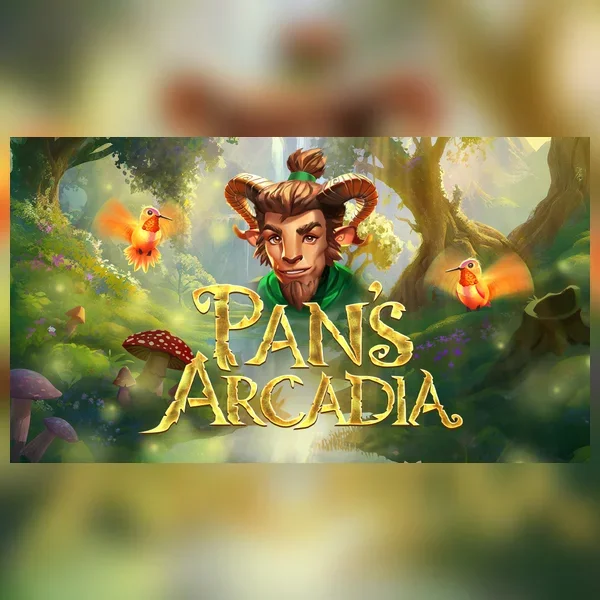
Pan’s Arcadia combines a quiet mythological setting with a bonus that changes its symbol population as it progresses. Dice help determine the opening duration, while later collections build Cube points towards different stages. These are separate sources of variation: starting with more spins is not the same as reaching the final stage. The game asks the reader to follow both the remaining attempts and the rules active on the reels.
Pan’s Arcadia at a glance
| Provider | Thunderkick |
|---|---|
| Genre / theme | Greek Mythology |
| Game type | Video slot |
| Reels / grid | 6 reels × 3 rows |
| Reference RTP | 96.1% |
| Volatility | Very High |
| Payout mechanic | 13 paylines |
| Maximum win | 4320 the bet |
| Release date | 28 January 2026 |
| Main features | Six-reel, 13-line play; Sticky Respins; three Scatters trigger a dice-set Free Spins award; Cube points progress through six bonus stages. |
RTP and stake limits can vary by version and market. Check the information screen in the game you open. Maximum win is a ceiling, not an expected result.
A line game with conditional Sticky Respins
The ordinary layout has six reels, three rows and 13 paylines. Pan and elemental nymphs appear within a woodland setting, and the published description includes multiplicative 2x Wilds. A Sticky Respin can activate on a winning spin, locking symbols while the remaining positions spin again. The wording is conditional: a win provides an opportunity for the feature, rather than establishing that every winning result automatically receives a respin.
This persistence creates a different relationship from an entirely fresh spin. Existing positions remain relevant while replacements seek another combination around them. The preserved symbols do not by themselves ensure another payout, and the available description does not give the activation probability. That uncertainty matters when comparing an attractive locked arrangement with the chance of actually extending it.
Opening dice and the Cube progression
Three mystical Scatters trigger the bonus. Three dice then award up to 18 Free Spins. During the feature, every third additional Scatter grants three extra spins. Collections also advance the level system: completed sets of three dice have their values multiplied together and added to the Cube meter. The multiplication applies to those dice values for progression; it should not be mistaken for a direct multiplier on every cash win.
Across the first four levels, reached from 36 through 179 Cube points, different nymph symbols become Wilds for the rest of the round. At 180 points, level five removes mid-paying symbols and introduces Dark Pandora. Sticky Respins remain active there, and a Wild is placed before each spin. These changes alter the available symbol population as well as adding a Wild position, so progression is more substantial than merely increasing a displayed counter.
The end game changes the rules again
At 216 points, Pandora of Light replaces Dark Pandora, leaving Pan symbols and Wilds alongside it. Each spin places a 2×2 Wild on reels three and four; each occupied position applies a 2x multiplier to wins passing through it. Sticky Respins can now lock symbols even without a win. Reaching this stage is conditional on the accumulated points before the round ends, rather than an automatic consequence of entering Free Spins.
The current card lists 96.10% RTP and very high volatility, while the release announcement states 4,320x potential. For another variable opening award, The Hand of Midas uses mini reels to determine its free-spin allocation. Pan’s Arcadia additionally makes later collections change the active reel rules. Neither system lets the player choose the random opening result, and theoretical RTP does not predict an individual attempt.
Strengths and weak points
Strengths
Cube thresholds create tangible changes to symbols and persistence, giving the bonus a progression system that can be understood separately from its changing spin count.
Weaknesses
The most distinctive end-game rules require 216 points before the round finishes. Random dice values and additional Scatter arrivals leave that progression uncertain rather than assured.
Our Editor’s View
Pan’s Arcadia has a clear reason for its layered structure: later levels change which symbols remain and how Sticky Respins behave. Its strongest design choice is that progression has visible mechanical consequences instead of functioning as a decorative level label. The trade-off is complexity and conditional access. An opening award of spins does not establish how far the Cube meter will advance, and the final stage cannot be treated as the normal bonus experience. It is better suited to readers interested in tracking evolving rules than to those wanting one consistent free-spin format from beginning to end.
Related slot reviews

Midas Golden Touch – Reborn
Shared theme: Greek Mythology

Midas Golden Touch 2
Shared theme: Greek Mythology

Midas Golden Touch: Thunder Pots
Shared theme: Greek Mythology