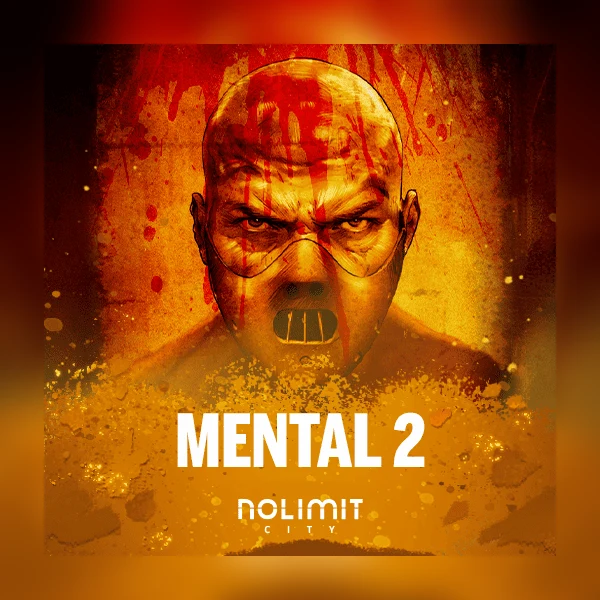
Mental II returns to an asylum setting with a 3-2-3-2-3 grid and a feature system built around Fire Frames, Fire Reels and increasingly persistent multipliers. Its unusual layout begins with at least 108 ways to win, but the more important change is how symbols split, nudged wilds gain value and Enhancer Cells introduce different modifiers. The bonus tiers determine which parts of that state survive.
Mental II at a glance
| Provider | Nolimit City |
|---|---|
| Genre / theme | Horror |
| Game type | Video slot |
| Reels / grid | 3-2-3-2-3 |
| Reference RTP | 96.06% |
| Volatility | 41.54157315 |
| Maximum win | 99999 the bet |
| Release date | 25 March 2025 |
| Main features | Fire Frames, Fire Reels and moving Wilds alter the irregular grid. Bonus tiers determine which multipliers and board changes remain active. |
RTP and stake limits can vary by version and market. Check the information screen in the game you open. Maximum win is a ceiling, not an expected result.
Base game structure
A narrow grid expands through fire. The stepped 3-2-3-2-3 arrangement gives five reels a distinctive profile. Fire Frames and Fire Reels split symbols, increasing possible connections, and enough lit Fire Frames activate Enhancer Cells below the grid. Those cells may reveal standard wilds, Patient symbols or xWays, which expands matching symbols. The initial 108 ways is a starting configuration, not a promise that every spin reaches the same connection count.
Modifiers that change the board
Several modifiers do separate jobs. xSplit divides everything on its reel, while xNudge Wilds drop until fully visible and increase their multiplier at every step. xHole absorbs symbols and returns them with large multipliers, and xMental can award an extra spin with guaranteed features. xGod offers a direct route to the stated maximum win. Some effects alter symbol count, some build a multiplier through movement, and some change the timing of the next spin.
Bonus rules and persistence
Three Cognitive scatters trigger Bloodletting Spins, where Fire Frames and Fire Reels remain sticky. Adding one Disembodied scatter upgrades the round to Surgery Spins and introduces a persistent Dead Multiplier. Two Disembodied scatters alongside the original three trigger ExperiMENTAL Spins, keeping multiple scatters sticky while the Dead Multiplier grows without resetting. The extra scatter changes persistence, not simply the number of free spins.
Confirmed settings and limits
The record lists 96.06% RTP, numeric volatility 41.54157315, a 3-2-3-2-3 layout and a 99,999x maximum payout. Paylines are not stated, and the release date is 25 March 2025. The extreme numeric volatility is a concrete boundary: overlapping multipliers and splits can create a large state, but the public description cannot predict how often the required sequence will form.
Strengths and weak points
Strengths
Mental II gives its stepped grid a real progression: Fire Frames open Enhancer Cells, xWays expands connections, and scatter tiers decide which multipliers and reels remain active.
Weaknesses
Its extreme volatility and overlapping modifiers create a concrete limit: sticky states still need qualifying symbols, while the missing payline record prevents a simple comparison of ordinary results.
Our Editor’s View
Mental II makes persistence the clearest sequel-level idea. Fire Frames and Fire Reels help open the board, then the three scatter combinations decide whether that expanded state resets, remains sticky or carries a Dead Multiplier through the feature. xSplit, xNudge and xHole add different routes to a stronger collapse, while xGod is described as an immediate maximum-win route rather than a normal progress meter. The trade-off is a very high-complexity model: the 41.54157315 volatility index, missing payline data and overlapping modifiers make ordinary outcomes difficult to compare. Readers who like tracking several state variables will find a coherent structure; those wanting a single, easily read bonus counter may find the asylum’s rules demanding. That uncertainty is part of the game’s identity, because persistence changes the board without removing the need for another qualifying result.
Related slot reviews

Devil Fire
Shared theme: Horror

Devil Fire Bonu$ Coin
Shared theme: Horror
Vampire’s Charm
Shared theme: Horror