
Laughing Buddha sets its game inside a temple and makes symbol choice part of the bonus identity. Habanero’s exact product page states that three Scatters enter the Free Game feature, where eight Free Games are awarded with expanding symbols; Wild symbols multiply a win by x2 or x3. The combination gives the slot several linked ideas—entry, expansion and multiplication—without requiring the reader to infer rules from the theme alone. Its underlying game is a 5×3 layout with 28 lines.
Laughing Buddha at a glance
| Provider | Habanero |
|---|---|
| Genre / theme | Asian |
| Game type | Video slot |
| Reels / grid | 5×3 |
| Volatility | HIGH |
| Payout mechanic | 28 Lines |
| Maximum win | x2,002 maximum multiplier the bet |
| Main features | Three Scatters trigger eight Free Games with expanding symbols; Wilds multiply wins x2 or x3. |
RTP and stake limits can vary by version and market. Check the information screen in the game you open. Maximum win is a ceiling, not an expected result.
A temple slot with 28 lines
The listing specifies five reels, three rows and 28 lines, unlike the 243-Ways games elsewhere in the group. The overview omits the paytable, symbol values and line diagrams, so exact base-game wins require the game itself. It names Select Symbols as a special feature but does not say which symbol is selected or when. The 28-line count should not be converted into a guessed path map; line wins still depend on the undisclosed paytable.
The temple setting supports an Asian theme, but not an invented mythology for the rules. The documented roles are distinct: Scatters trigger the feature, symbols expand during Free Games, and Wilds multiply wins. That separation matters because expansion and multiplication are not presented as one combined action.
Three Scatters, eight Free Games
Three Scatters enter the Free Game feature and award eight spins with expanding symbols. The overview does not say whether extra Scatters change the count, whether the feature retriggers, or how symbol selection works. The Select Symbols label alone does not establish those steps. This is enough to state the trigger and initial award, but not a full bonus flow beyond that point.
Wilds multiply wins by x2 or x3, separately from the expanding-symbol rule. The page does not say expansion creates a Wild or that the multiplier applies to every feature result. Both mechanics are documented, but their interaction is not. Readers should evaluate each rule on its own rather than assume one is a consequence of the other.
Settings and a measured comparison
Volatility is HIGH; RTP options are approximately 86%, 92%, 94%, 97% and 98%. Check the local information screen for its setting. The x2,002 maximum is distinct from the x2/x3 Wild multipliers. No release date is stated. A maximum multiplier cannot be used to infer a usual Free Game payout, particularly when the feature’s selection and retrigger rules are not supplied.
Dragon’s Gate foregrounds bonus choice in its published title. Laughing Buddha instead documents expanding symbols and Wild multipliers, though its Select Symbols label lacks operational detail. The comparison is limited to how feature concepts are presented, not a claim that the games share a selection mechanic.
Strengths and weak points
Strengths
The Scatter trigger, expanding-symbol Free Games and x2/x3 Wild multipliers give the feature a readable framework beyond its temple theme, with distinct roles for each symbol type.
Weaknesses
Retrigger rules and expansion selection are omitted, so the public summary cannot establish the full decision sequence for the eight-spin feature.
Our Editor’s View
Laughing Buddha’s overview separates its key roles: Scatters start eight Free Games, symbols expand in the feature, and Wilds multiply wins by x2 or x3. That is enough to describe the structure without inventing selection or retrigger rules. The 28-line base is clear, but HIGH volatility and several RTP settings make the installed version important. Its x2,002 maximum is a ceiling, not a likely outcome. Readers seeking a concise bonus concept can follow the documented framework; those who need a fully specified sequence should consult the detailed game rules.
Related slot reviews

Lucky Fortune Cat
Shared theme: Asian
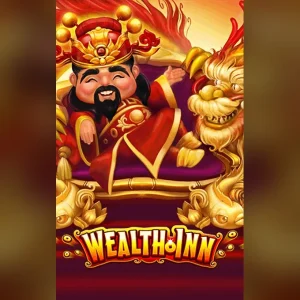
Wealth Inn
Shared theme: Asian

Mystic Fortune Deluxe
Shared theme: Asian