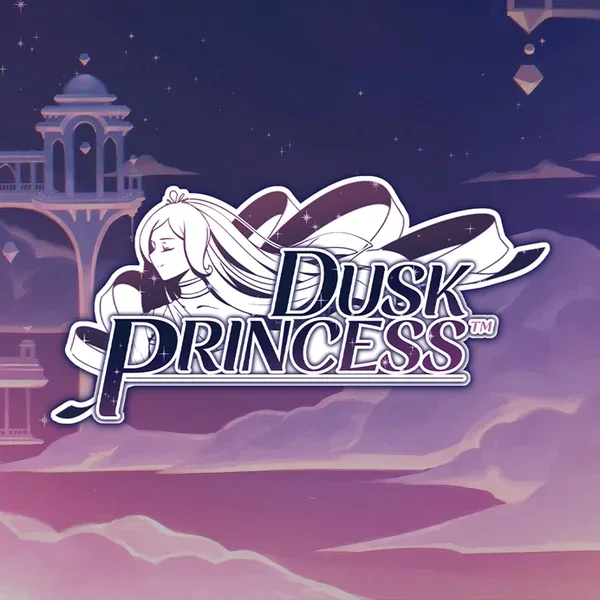
Dusk Princess ties its cluster wins to a meter whose first threshold is eight winning symbols. Filling the Blessing Bar awards Wilds with multipliers, while later fills require progressively larger wins and can increase the Wild count or the multiplier already on the bar. Cascades keep the grid changing after wins, but partial meter progress resets between spins. Three scatter-triggered Courts alter those rules in different ways, culminating in a mode where a full bar activates after every spin. The game’s identity comes from balancing a resettable base meter against bonuses that preserve or guarantee its activation.
Dusk Princess at a glance
| Provider | Hacksaw Gaming |
|---|---|
| Genre / theme | Fantasy |
| Game type | Video slot |
| Reels / grid | 6 reels × 5 rows |
| Payout mechanic | Cluster wins |
| Maximum win | 10,000x bet |
| Main features | Cluster wins cascade; wins fill a Blessing Bar, first at 8 symbols, then thresholds rise by 2. Full bars award multiplier Wilds. Three, four or five FS trigger Courts with distinct progressive or per-spin activation rules. |
RTP and stake limits can vary by version and market. Check the information screen in the game you open. Maximum win is a ceiling, not an expected result.
Clusters feed a threshold that rises
The official page describes a six-reel, five-row game with Cluster wins and a stated maximum of 10,000 times the bet across all modes. Super Cascades remove the regular paying symbols that formed a win, then drop new symbols into the open spaces. That gives one result a chance to lead into another grid state. The Blessing Bar is a separate progression system outside the grid: when a winning combination lands, it begins filling, and an eight-symbol win is needed for its first activation.
After a fill, the next threshold rises by two winning symbols each time. If a spin ends with the bar only partly filled, that partial progress resets between spins. When full, the bar resets and awards Wild symbols carrying multiplier values. On its first activation it awards three Wilds. A Wild substitutes for paytable symbols, and its multiplier applies to wins connected to that Wild. If multiple multiplier Wilds contribute to the same combination, their values add together before being applied. This makes placement and connection consequential: the values are not described as one screen-wide multiplier applied to unrelated wins.
Repeated activation upgrades the award
Subsequent Blessing Bar activations can increase the number of Wilds by one each time, or add a random multiplier to the existing bar value. The listed additions range from 1x through 500x. The page does not say that every activation raises both quantities together, so the rule is best understood as a progression that can strengthen either the number of awarded Wilds or their multiplier value. The additive values also mean the bar’s multiplier can build from its existing state rather than being replaced by a single new number.
The three free-spin Courts preserve distinct starting conditions. Three FS scatters trigger The Dusk Court for 10 spins, with increased chances of more Wilds and higher multipliers; its bar and awards progress throughout the bonus, starting at three Wilds and 2x. Four scatters open The Lunar Court for 10 spins, starting at four Wilds and 5x, but the first meter fill requires 15 winning symbols and each later threshold rises by three. Five scatters trigger The Night Court for 10 spins: the bar stays full and activates once after regular wins on every spin, beginning at six Wilds and 10x. FS symbols cannot land in any of these Courts, so the stated bonus rules do not include retriggering via FS symbols.
Configuration and the reset trade-off
The official description identifies cluster wins, six reels and five rows, plus a maximum win of 10,000x available in all game modes. It does not list RTP, volatility or a calendar release date in the observed page. Those values remain unknown. The maximum is a published ceiling, not a forecast for a session. The page also does not state the precise cluster-size threshold for ordinary wins, beyond identifying the win type, so this review does not invent one.
The meter’s reset rule changes how the base game feels mechanically: a near-full bar at the end of a spin does not carry partial progress into the next one. Cascades can extend a winning sequence, but the bar’s required total also climbs after each completed fill. The Courts respond to this friction in different ways: Dusk and Lunar keep progress during their bonuses, while Night Court removes the incomplete-fill problem by starting full and firing on every spin. Each mode makes a specific adjustment rather than merely adding more spins.
Strengths and weak points
Strengths
The Blessing Bar connects cluster results to a changing Wild award, and the three Courts meaningfully alter starting multipliers, fill thresholds or activation timing.
Weaknesses
But partial base-game meter progress is lost between spins, while every completed fill raises the next threshold. RTP and volatility are also absent from the official specification.
Our Editor’s View
Dusk Princess has a strong mechanical through-line: wins feed a meter, a full bar produces multiplier Wilds, and later fills can expand the award while demanding more winning symbols. The feature is not frictionless in base play, because unfinished progress resets between spins and the threshold rises after every activation. Its three Courts answer that constraint in different ways, preserving progression, raising the starting award, changing the first fill requirement, or ensuring a full bar activates each spin. That variation gives the bonus ladder substance. The official page is comparatively clear about layout and maximum win but does not provide RTP or volatility, and it omits the precise cluster threshold. Players who enjoy visible progression systems and evolving Wild values can follow the logic; numerical comparisons still require configuration details beyond this observation.
Related slot reviews
Asgardian Rising
Shared theme: Fantasy
Gem Saviour
Shared theme: Fantasy
Hood vs Wolf
Shared theme: Fantasy