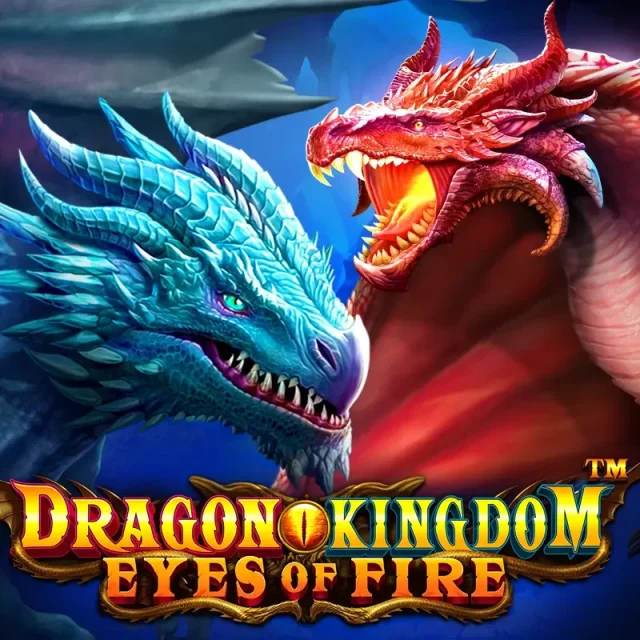
Dragon Kingdom – Eyes of Fire is a compact fantasy slot built around a three-by-three board and a dragon-lair bonus idea. Its small screen makes the important question easy to see: can the special feature turn a simple line win into a meaningful treasure result?
Dragon Kingdom – Eyes of Fire at a glance
| Provider | Pragmatic Play |
|---|---|
| Genre / theme | Fantasy |
| Game type | Video slot |
| Reels / grid | 3 x 3 |
| Reference RTP | 96.49% |
| Payout mechanic | 5 |
| Maximum win | 1250x the bet |
| Main features | A Progressive Feature is associated with finding the dragons’ lair and receiving treasure; the exact trigger sequence is not stated in the available page text. |
RTP and stake limits can vary by version and market. Check the information screen in the game you open. Maximum win is a ceiling, not an expected result.
A compact five-line base game
The standard game uses three reels and three rows with five paylines. That is a deliberately narrow layout: ordinary wins are read across the displayed lines, while the dragon imagery supplies the identity rather than changing the underlying evaluation. The published stake range is 0.05 to 250, so the title can be approached at very different nominal bet sizes, but the reels still offer the same compact rhythm.
The official description tells players to find the dragons’ lair and links the game to a Progressive Feature. It does not provide a full symbol-by-symbol paytable in the page text, so this review does not assign values to individual icons. That omission matters: a three-by-three game can look busy while producing relatively few eligible line combinations, and the five-line count is the safer way to understand a normal spin.
Finding the feature
The documented distinguishing mechanic is the Progressive Feature, presented as the route to a large treasure. The source confirms the feature’s existence and its lair/treasure concept, but it does not state a trigger count or a complete sequence of bonus steps. Accordingly, the article treats the feature as conditional access rather than promising a particular award. Players should use the active help screen to confirm how the feature begins and whether any progressive state carries from one event to the next.
This is a useful limitation to keep in view. A feature name is not itself a payment rule. On the available evidence, the strongest supported interaction is the contrast between the small five-line base game and the separate treasure feature. Nothing on the exact page confirms that a visible dragon, a line win or a near-complete pattern guarantees entry. The prudent reading is that the bonus can change the scale of a result only after its own stated condition has been met.
Configuration and editorial view
The exact official page lists 96.49% RTP, a 1,250x maximum win and a 3×3 reel-and-row layout. Volatility is not labelled in the page’s extracted specification, so it remains unknown here. The source also marks ante bet and bonus buy as unavailable. Those figures describe this standard reference and should still be checked against the operator’s information panel if a regional configuration is offered.
Strengths and weak points
Strengths
The three-by-three layout is easy to scan, and the five fixed paylines give ordinary wins a clear mechanical boundary. The documented lair-and-treasure feature supplies a specific fantasy identity without requiring readers to decode a crowded Megaways grid.
Weaknesses
The official page does not disclose the progressive trigger, bonus sequence, symbol paytable, or volatility label in the available specification. That leaves the most important route to the headline feature conditional and requires help-screen verification before relying on assumptions.
Our Editor’s View
Dragon Kingdom – Eyes of Fire is best suited to readers who prefer a small, legible board and a clearly separated bonus concept. Its 96.49% reference RTP and 1,250x ceiling are useful orientation points, but they do not explain how often the progressive feature appears or how a treasure round unfolds. Compared with Gates of Olympus, which makes its cascade and multiplier logic more explicit, this title leaves more of the bonus procedure to the in-game rules. That is not a defect in the theme; it is a reason to inspect the exact paytable before play. The appeal is concentrated fantasy presentation and compact line play, while the evidence boundary is unusually important.
Related slot reviews

Emerald’s Infinity Reels
Shared theme: Fantasy

Wildchemy
Shared theme: Fantasy
Dragons Awakening
Shared theme: Fantasy