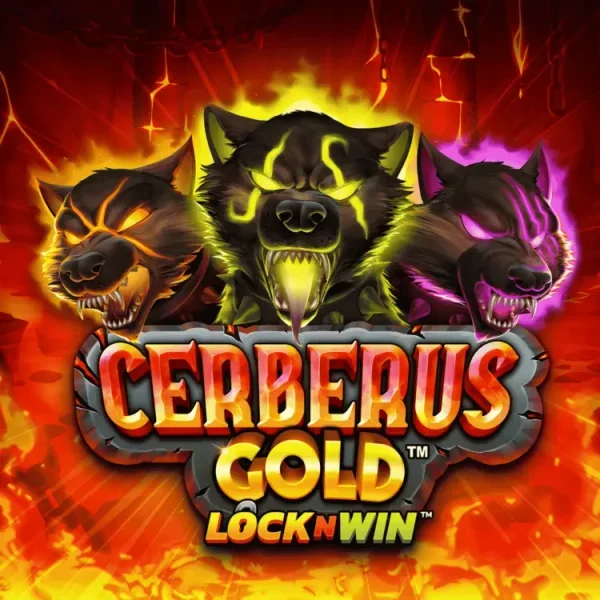
Cerberus Gold puts cash Fireballs beside a ways game that can gain extra rows. A Collect on the fifth reel makes the other four reels pay out their Fireball values, while Souls increase a multiplier. The three LockNWin modes each add a different target for that cash. One applies a starting multiplier, another gathers jackpot coins, and Supreme turns landing Fireballs into collectors of other colours.
Cerberus Gold at a glance
| Provider | PearFiction Studios |
|---|---|
| Genre / theme | Greek Mythology |
| Game type | Video slot |
| Reels / grid | 5×3 to 5×6 |
| Reference RTP | 96.02% |
| Volatility | Medium |
| Payout mechanic | 243 to 7,776 ways |
| Release date | 16 April 2024 |
| Main features | Fireballs on reels 1–4, Collect on reel 5 and a Soul multiplier; reel splits and three LockNWin modes with distinct cash and jackpot rules. |
RTP and stake limits can vary by version and market. Check the information screen in the game you open. Maximum win is a ceiling, not an expected result.
Five reels, two jobs for the board
The five-reel board can run from three to six rows, and PearFiction lists 243 to 7,776 ways. A Split in the top row exposes up to three additional symbols on the reel below. The published range describes the grid as a whole. It leaves the distribution of heights on individual reels open. A split matters to the number of symbol positions in play, while the ordinary game still needs a qualifying combination before it can pay a ways win.
The cash side has a stricter positional rule. Fireball values appear on reels one through four. The Collect that gathers them appears on reel five. A Soul increases the multiplier by one step. The studio explains how that multiplier grows, though it does not publish the full carry-over and reset rules. The position of the Collect also makes it possible to see a board full of cash values that still needs the matching symbol on the last reel.
How the three LockNWin modes differ
Collecting the orange coin can open Multiply LockNWin, which starts at 2×. That figure belongs to the feature multiplier, rather than the whole-game maximum. The jackpot mode instead depends on gathering enough Jackpot coins. PearFiction describes that collection condition without giving the exact count needed for each award, or the probability of the yellow coin opening the feature.
Supreme LockNWin changes the value of a landing Fireball according to its colour. A yellow Fireball gathers all visible red values. A purple Fireball gathers both yellow and red values. The purple symbol therefore has a wider collection scope. This mode gives the player a reason to follow which colours are already present, whereas the other modes emphasise a multiplier or a jackpot-coin tally. The public feature outline leaves the starting respins and reset conditions unconfirmed.
RTP and the unresolved limits
The exact title is listed at 96.02% theoretical RTP and medium volatility. The available specification gives neither a whole-game payout ceiling nor a mapping of different configurations to operators. The jackpot-coin threshold and the interaction of a multiplier with other feature effects are useful points to check in the in-game rules. See a different Greek myth slot for another take on the theme.
Strengths and weak points
Strengths
Reel splits, fifth-reel cash collection and colour-linked Fireballs make the base game and Supreme LockNWin easy to distinguish. Each bonus mode has a recognisable objective.
Weaknesses
The published rules omit jackpot-coin thresholds, respin resets and the Soul multiplier carry-over conditions. These gaps limit a comparison of the three modes beyond their stated effects.
Our Editor’s View
Cerberus Gold works best when the board gives the player something specific to track. Reels one through four carry the cash, the fifth supplies the Collect, and Supreme asks which colours are already present. The title explains those relationships better than the payout ceiling or the bonus frequency. Its feature outline is enough to follow the main decisions, with the detailed limits left to the in-game rules.
Related slot reviews

Gods Gone Wild
Shared theme: Greek Mythology
Pots of Power: Zeus
Shared theme: Greek Mythology

Cupid
Shared theme: Greek Mythology