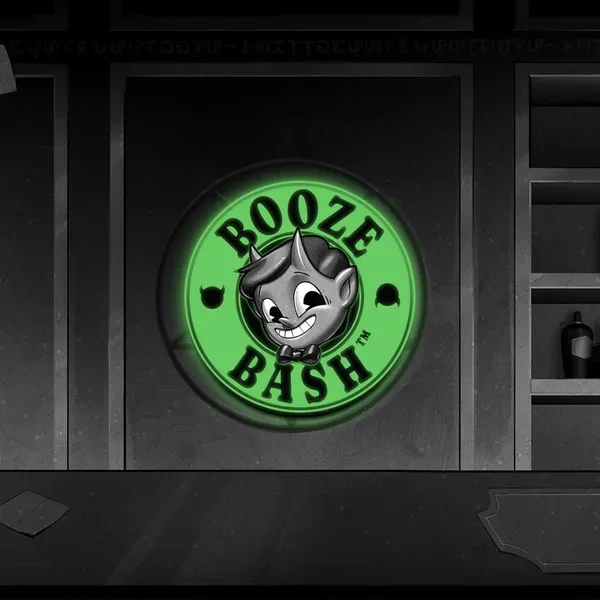
Booze Bash replaces the usual idea of matching a symbol across a line with a more literal pairing rule. Each paying symbol is split into a left half or right half, and the matching halves must sit side by side on the same row. Only three connected reel pairs qualify: 1–2, 3–4 and 5–6. This six-reel structure makes position essential; two matching halves separated by another reel do not satisfy the published rule.
Booze Bash at a glance
| Provider | Hacksaw Gaming |
|---|---|
| Genre / theme | Food & Drink |
| Game type | Video slot |
| Reels / grid | 6 reels; row count unknown |
| Main features | Matching left/right symbol halves pay on connected reel pairs 1–2, 3–4 and 5–6; completed multiplier pairs apply globally up to 20x. Three FS-pair thresholds add ten-spin modes, with the latter two adding the Bash Bar. |
RTP and stake limits can vary by version and market. Check the information screen in the game you open. Maximum win is a ceiling, not an expected result.
Pair formation and shared multipliers
The base game pays when matching left and right halves align on a permitted connected pair. The page describes no diagonal or cross-pair matches. Multiplier Pairs use the same split logic: an “x” half and a number half combine into a Global Multiplier for all wins on that spin, up to 20×. The page does not say how multiple pairs combine, so no arithmetic is assumed.
The three bonuses add rules in stages. One base-game FS Pair awards ten Guilty as Gin spins with an increased chance of high-paying symbols, multipliers and Wilds; each extra FS Pair adds two spins. Two initial pairs award ten Top-Shelf Trouble spins and add a Bash Bar. After ordinary wins are collected, it reveals one symbol per reel left to right. A dead symbol does nothing. A paying one can convert a matching half on the connected reel into a pair, except on positions that already won that spin. Converted positions then revert, allowing a separate later win there.
The Bash Bar’s special case
Top-Shelf Trouble’s Bar reveals paying or dead symbols; Wilds, FS symbols and multipliers cannot appear there. Active global multipliers sit outside the grid. Hell’s Happy Hour starts with three FS Pairs and retains this setup, but permits all special symbols in the Bar. FS and multipliers activate first, then remaining symbols resolve left to right. A Bar multiplier applies only to Bar wins, while a Bar Wild turns symbols on its reel into Wilds. The Bar cannot form pairs by itself: a revealed symbol still needs a matching half in a connected main-grid reel.
The tiers change more than their trigger count. Guilty as Gin improves symbol opportunities without adding a row. Top-Shelf Trouble adds a post-win conversion step, and Hell’s Happy Hour admits special symbols but limits Bar multiplier application to Bar wins. Extra FS Pairs award two spins in all three modes. Not every reveal pays: dead symbols, unmatched halves and previously winning positions can prevent a conversion.
The missing configuration figures
The exact page gives a six-reel matching rule and a 20× multiplier ceiling, but not row count, RTP, volatility, pair values, overall maximum win or release date. Since only connected pairs are stated, a conventional line count would be misleading. The global multiplier’s frequency and combination rule are also absent. Operator game help is needed to confirm return settings and pair payouts; the provider page explains how matches and conversions work, not how often they occur.
Strengths and weak points
Strengths
The split-symbol rule is concrete, and the three adjacent reel pairs make position easy to check. Bash Bar conversions have a readable order, with distinct boundaries for dead symbols, repeat positions and special reveals.
Weaknesses
A matching half must be in the connected reel on the same row, and the Bar cannot win by itself. RTP, volatility, row count, pair values and multiplier-combination rules are not supplied.
Our Editor’s View
Our editor finds Booze Bash most coherent when its bonuses are read as a sequence of increasingly involved matching rules. The base game asks for an adjacent left-right pair; Top-Shelf Trouble adds a post-win row that can complete certain pairs; Hell’s Happy Hour lets special symbols enter that row but restricts Bar multipliers to its own wins. This escalation is more precise than a generic promise of upgraded free spins. It also leaves genuine failure points: a Bar symbol may be dead, have no matching half, or target a position that already won. Readers who enjoy tracing how one symbol completes another may appreciate that clarity. The missing paytable and mathematical profile, however, prevent a fair comparison of pair values or expected return from the public description alone.
Related slot reviews
Tower Of Pizza
Shared theme: Food & Drink
Hey Sushi
Shared theme: Food & Drink
Prost!
Shared theme: Food & Drink